

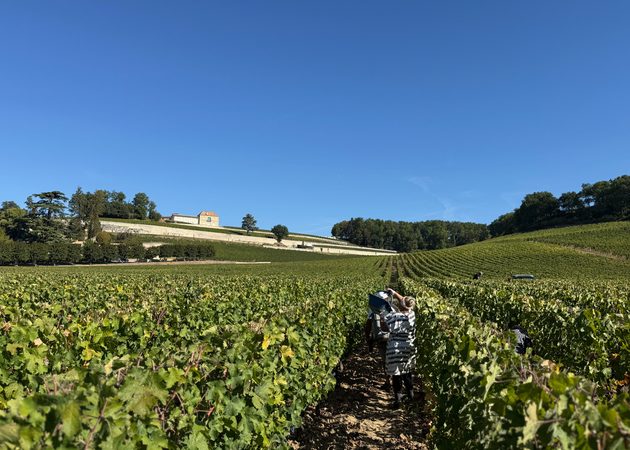
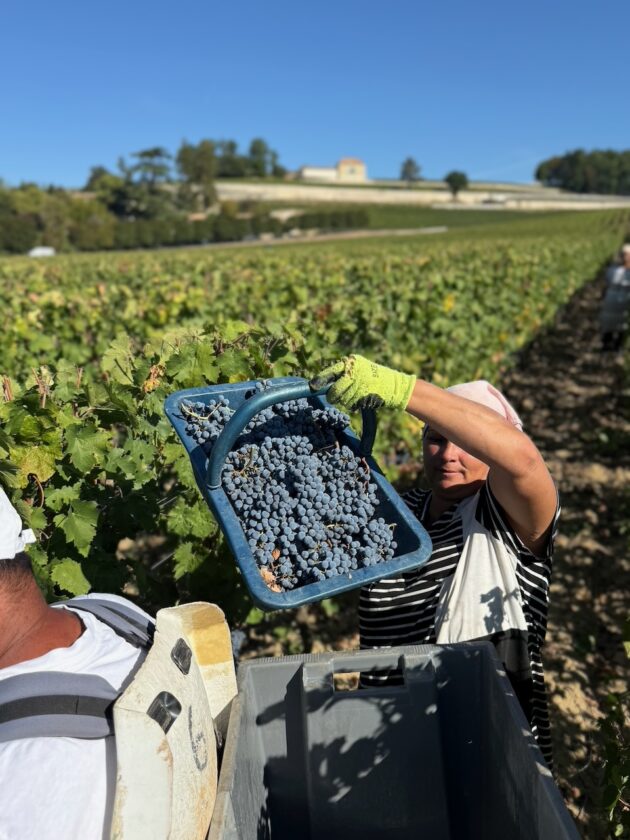
We had the earliest harvest on record this year, beginning in early August in some places. But it’s also been a long one, with Château Pavie in Saint-Émilion still harvesting their Cabernet Sauvignon this week. The photo above was from last Friday, 25th September, as they picked their Cabernet Franc.
So here’s a September photo journal of the red harvest at some randomly chosen vineyards across Bordeaux, starting with our own.
This is sent to friends on our mailing list.
Previously, our August harvest…
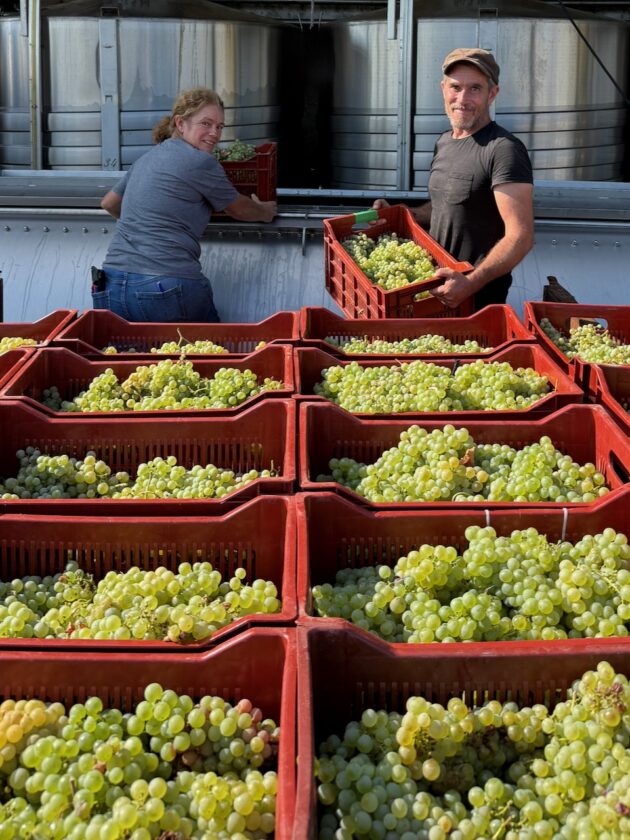
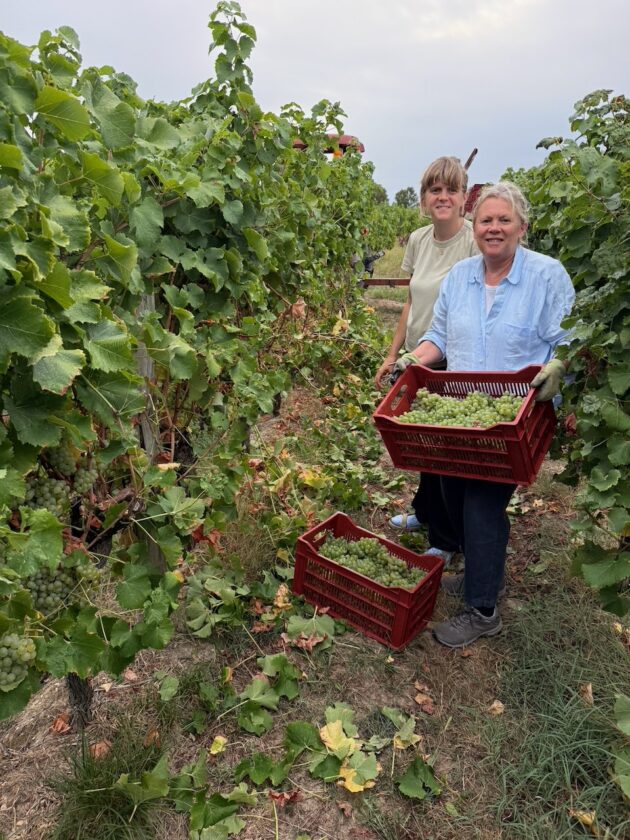
We kicked off our white harvest on 17 August. Thrown into the deep end was our new man Nicolas, who joined us in May. He has taken over from Daniel, who retired in June after a mere 41 years, but Nelly is on hand to show him the ropes. Angela and Sophie, right, perhaps less so.
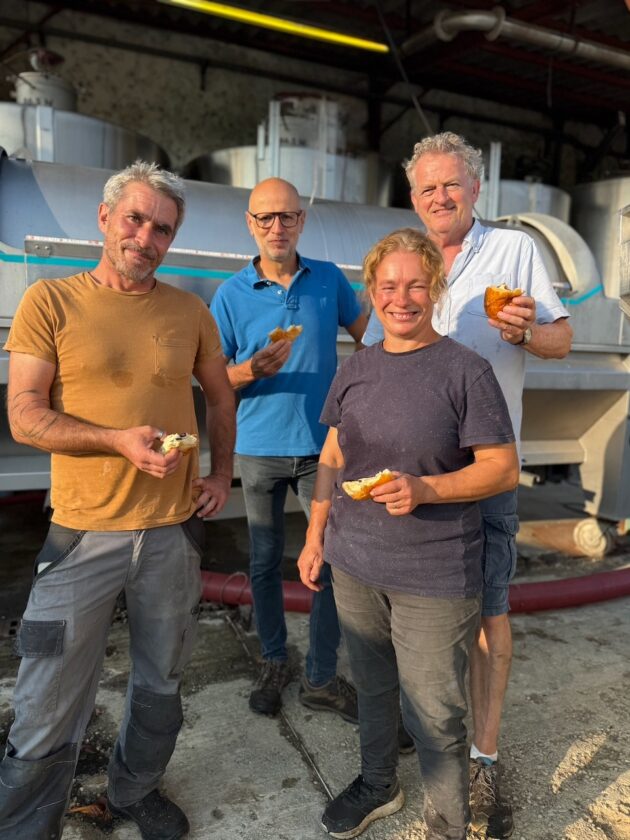
Nelly has been with us for all our 27 harvests, since our first in 1999. Our oenologist, or wine making consultant, is Mikaël Laizet, a director of Rolland Laboratories.
August was a month of very early starts for both the whites, and for the reds to make rosé. You can see the photo journal for our August harvest here – it’s also on Bauduc.com in News at the foot of the site and on gavinquinney.com
Onto the red
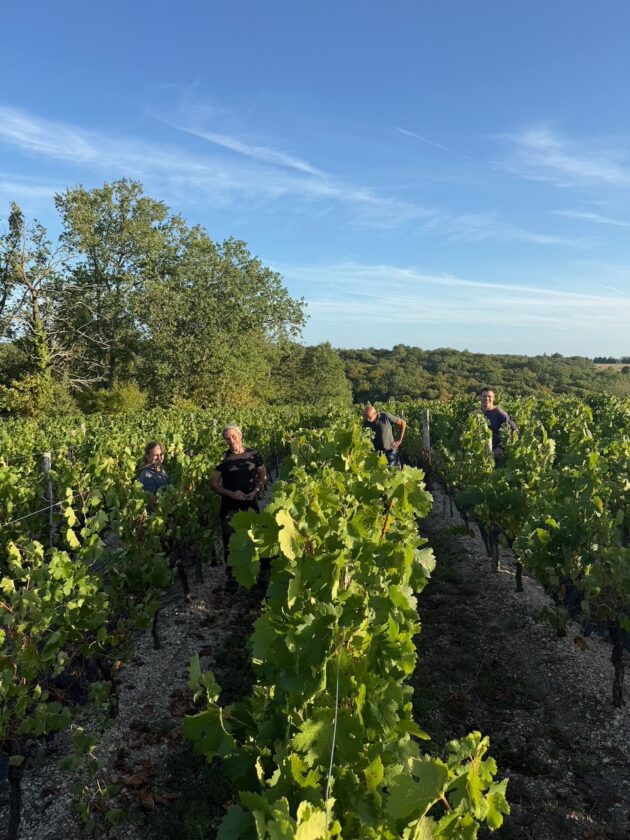
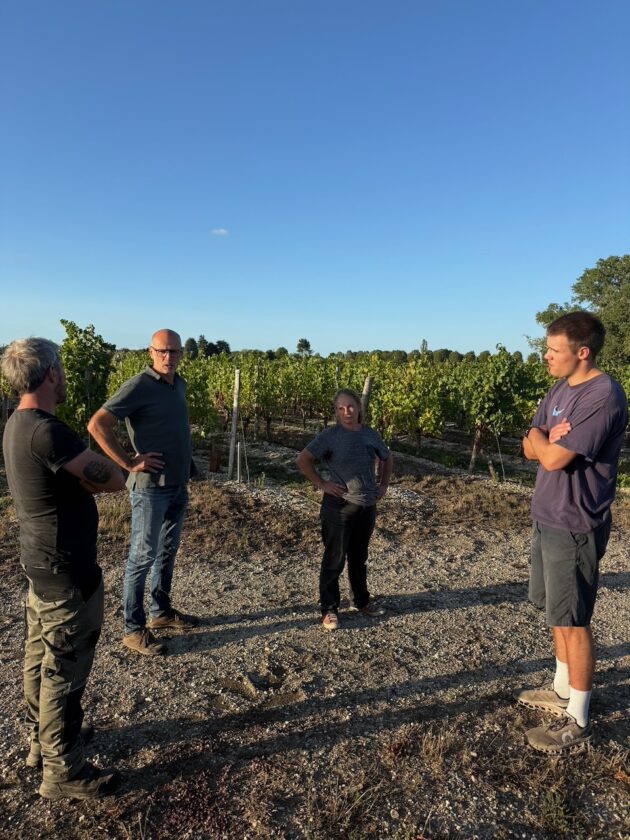
At the start of September the vines still looked healthy and green. Tasting the Merlot and Cabernet grapes with Mikaël.
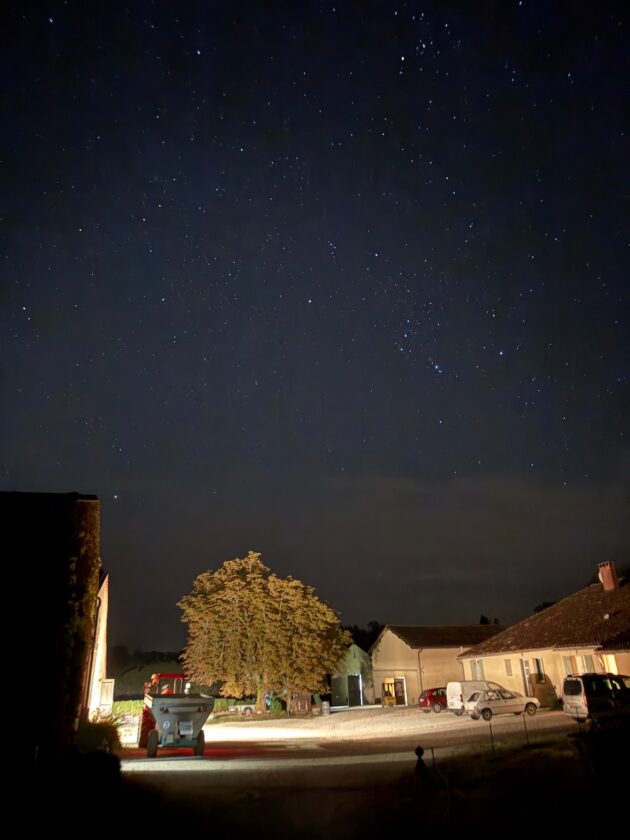
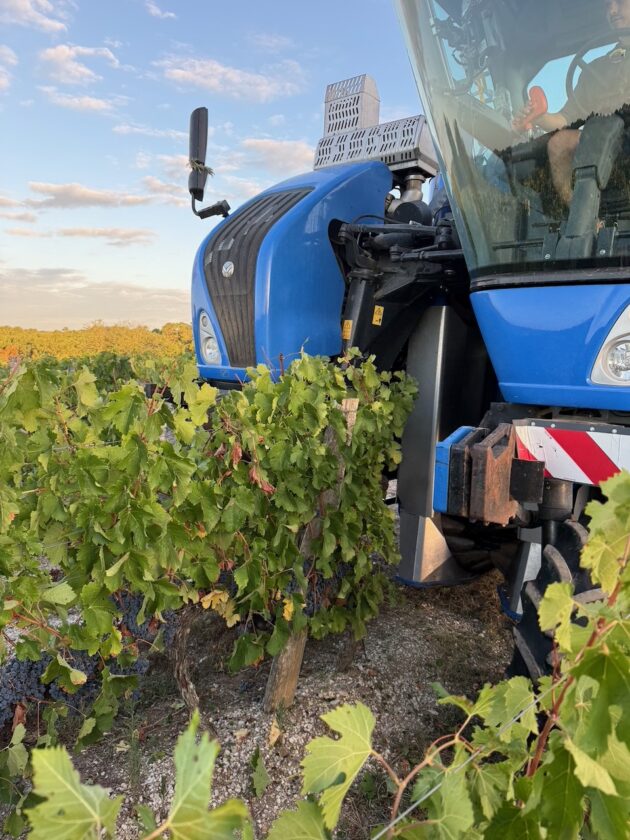
I suppose one benefit of an early start is you get to enjoy the stars. And the grapes are at their coolest.
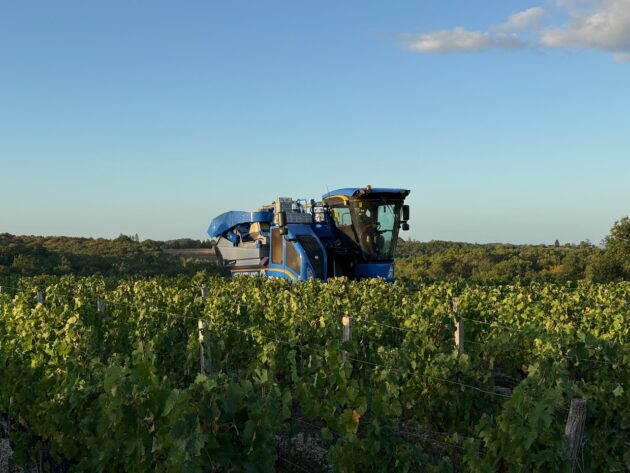
It’s a shame in a way that the harvest was over for most growers by around the middle of the month. The weather has carried on being sunny but the mornings have been fresh and sometimes chilly – ideal for the ripening.
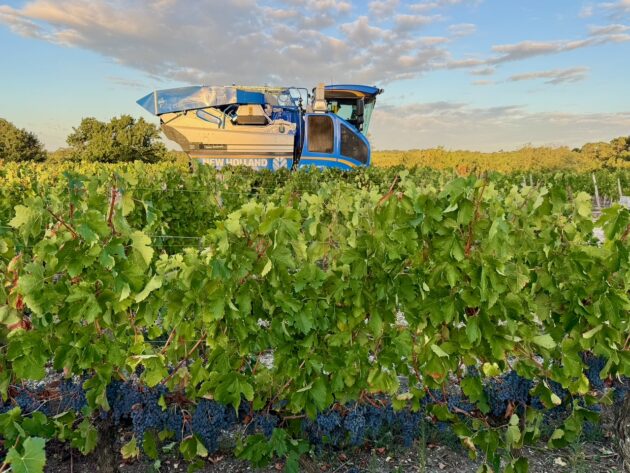
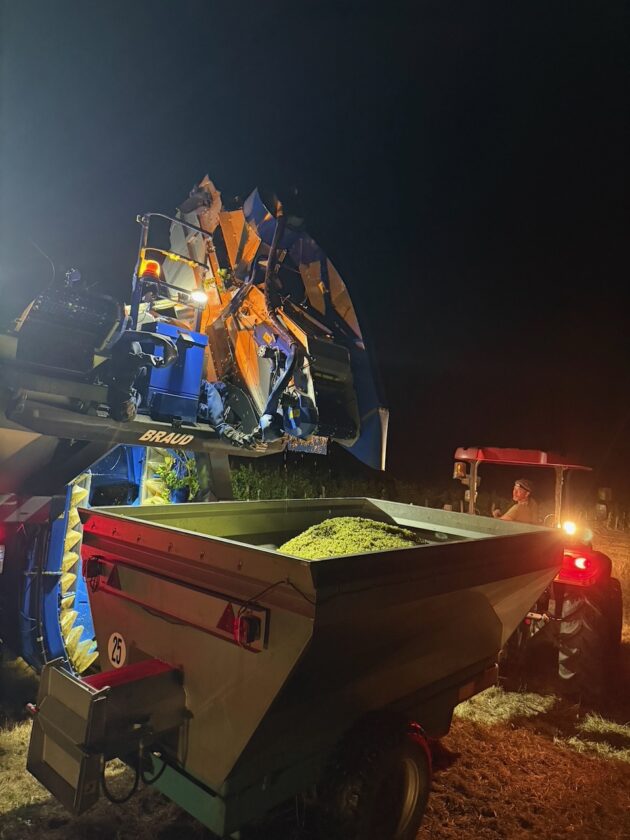
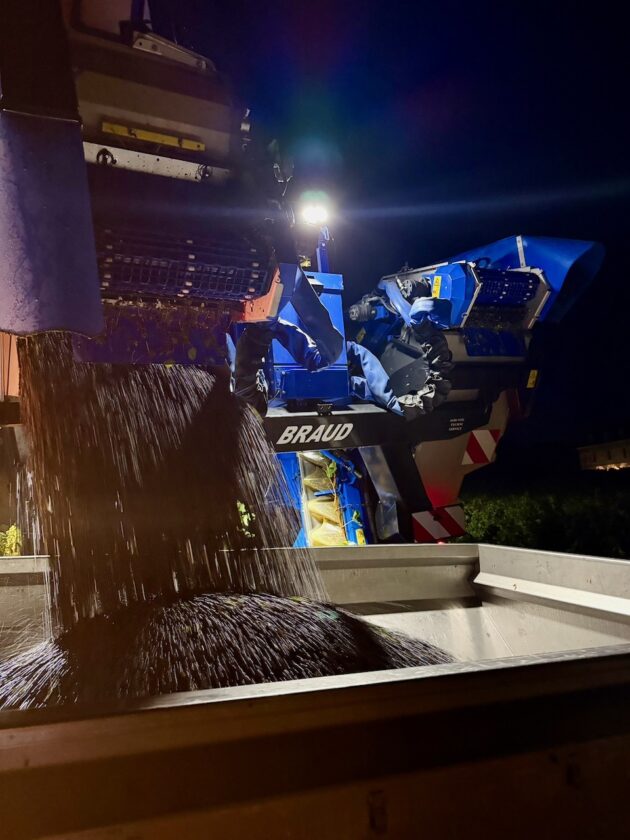
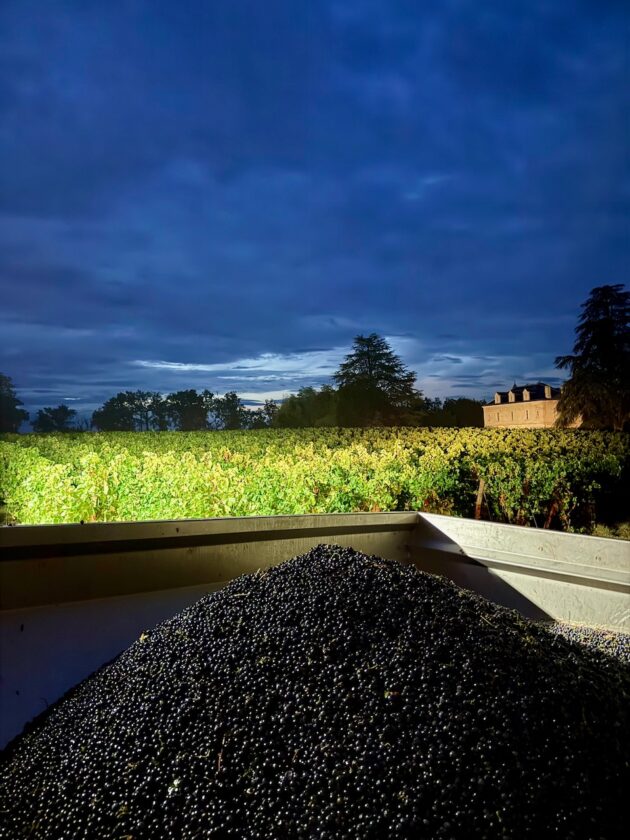
Obligatory before and after shot with machine harvesting the Merlot.
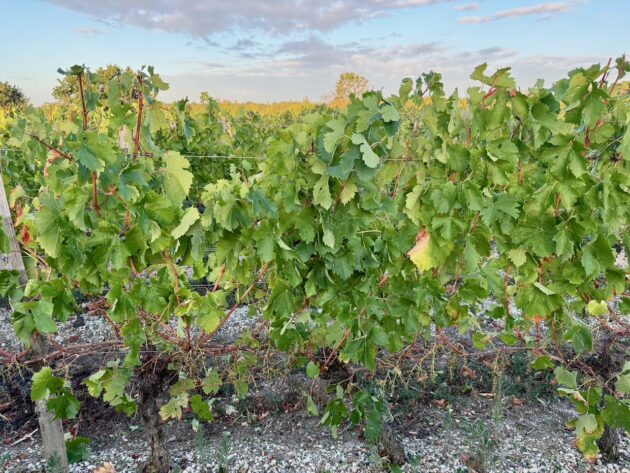
Gravel and clay soil and subsoil. We could have done with more rain at the right moment (some would have been nice) but the vines coped somehow.
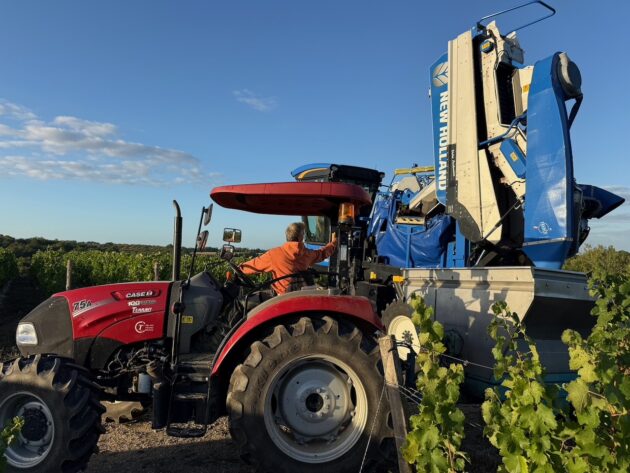
If the grapes are healthy and there’s no rot or mould it’s an efficient process, with an on-board sorter.
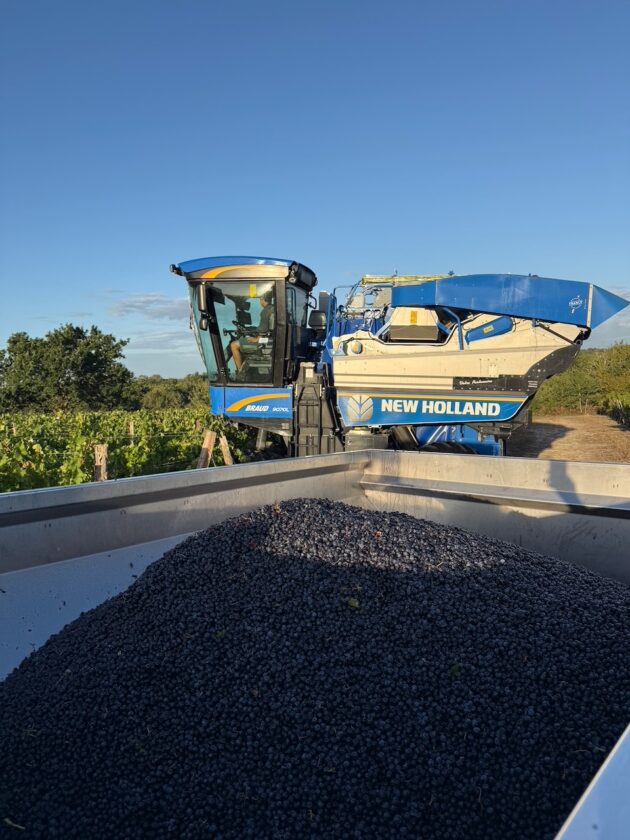
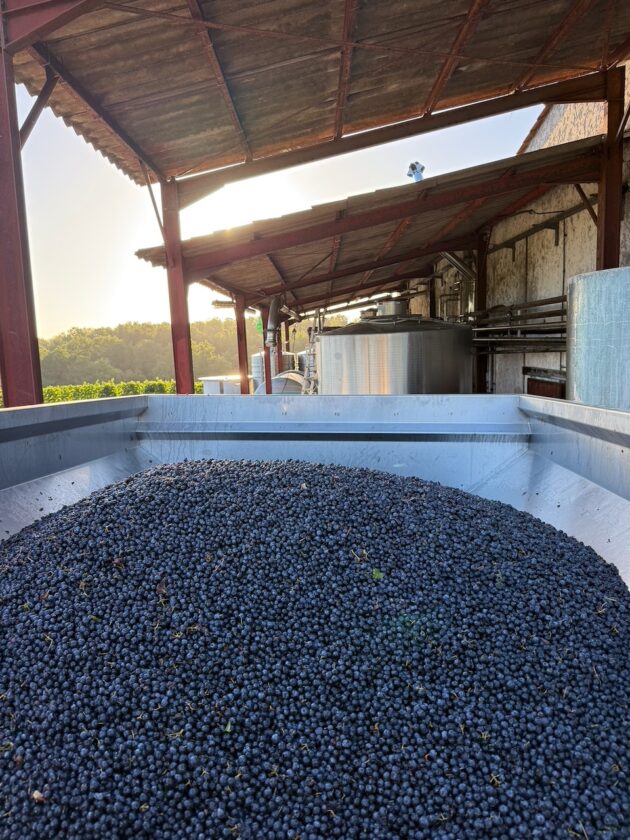
A couple of minutes by tractor to our winery.
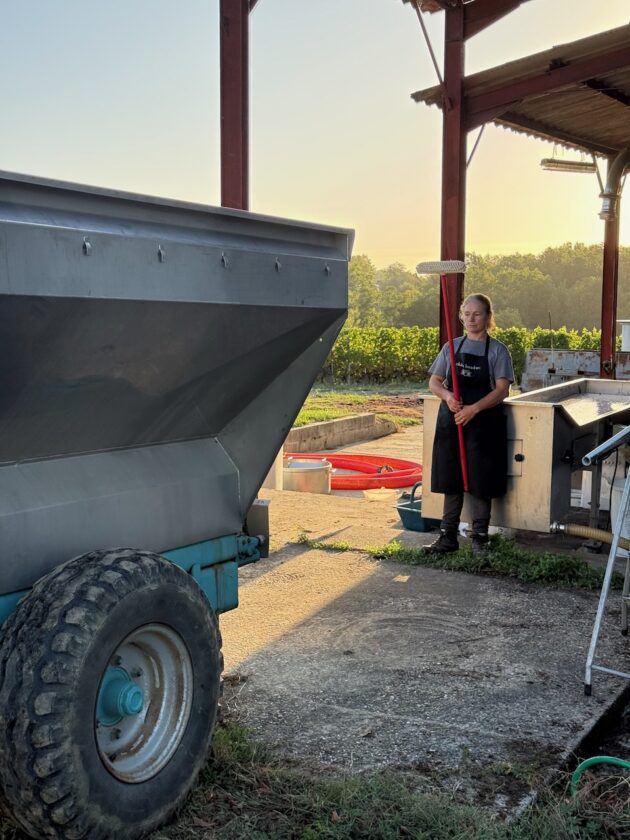
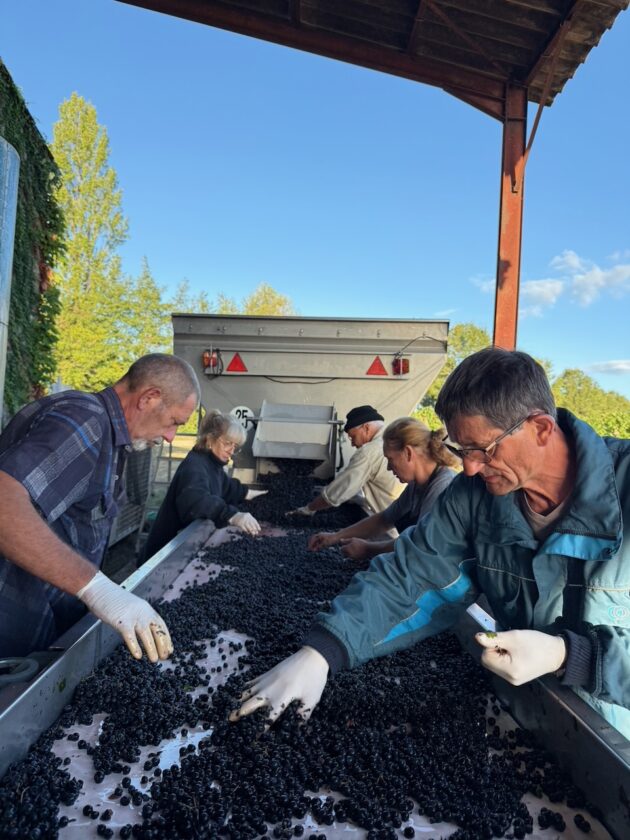
We use sophisticated GPS systems for helping the tractor driver to align the trailer correctly. We don’t have anyone checking on the grapes for making rosé as there’s minimal skin contact, and just the juice is fermented without the skins. That’s not the same though for making red as the grapes go into the fermentation vat (or stainless steel tank in our case), so at the sorting table – a conveyor belt – we get rid of any alien woody or stalky bits or whatever.
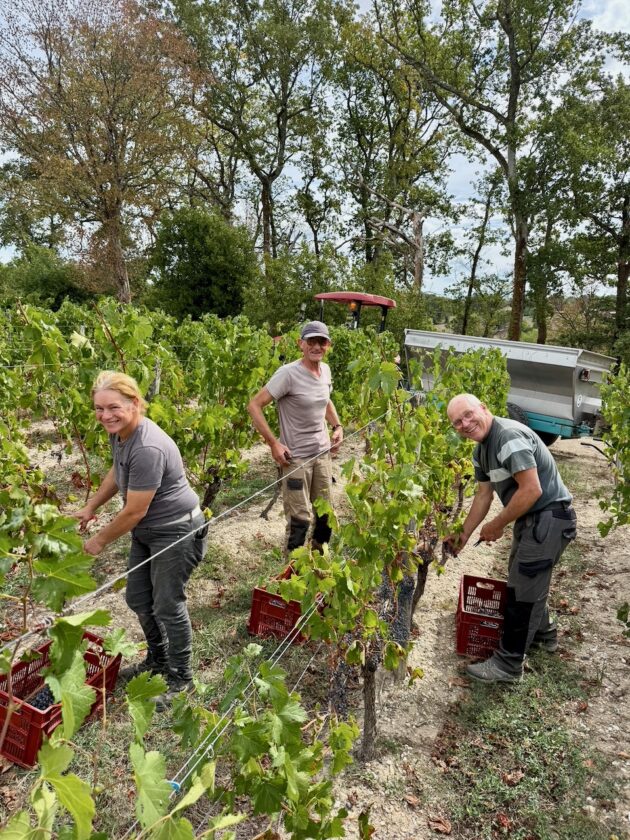
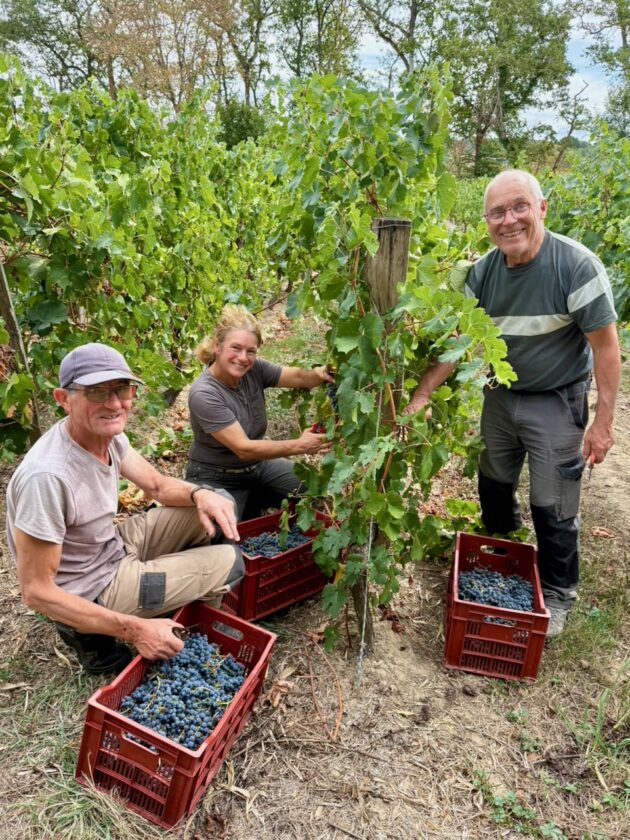
We hand pick some corners of the vineyard where the machine has difficulty getting in and out of the rows.
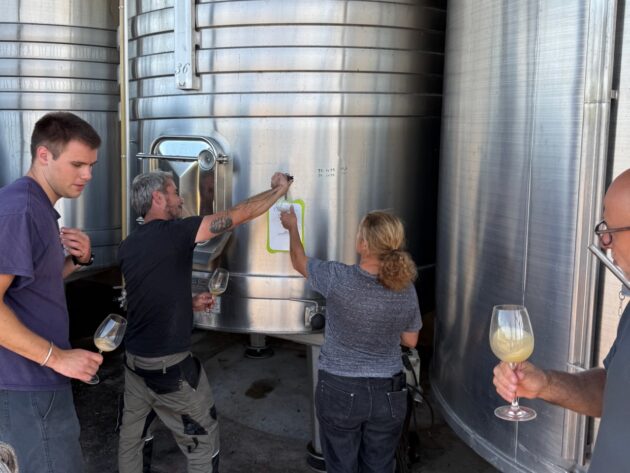
Tasting the fermenting whites and rosé. Will, who worked for a few months with us during the 2024 harvest, came over to check on how things are going before heading back to Sandhurst. Leadership skills aren’t taught here but working a harvest probably doesn’t do any harm.
The red harvest around Bordeaux
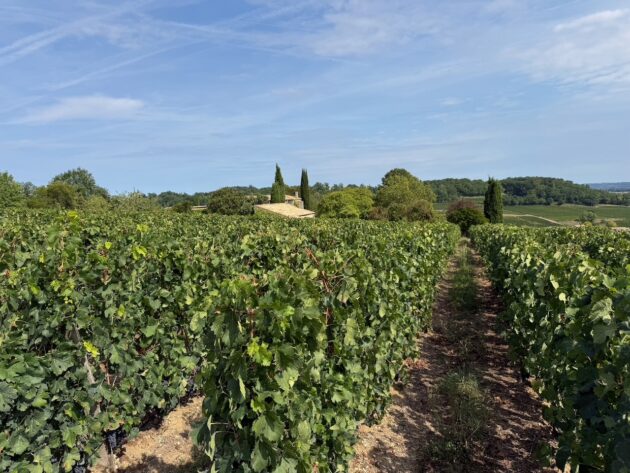
When you’re based not far from some of the finest vineyards in the world it’s not unreasonable to want to see how things are shaping up during the growing season, especially at the business end of it. Château Tertre Roteboeuf in Saint-Émilion produces one of my favourite wines, when I can afford it. Again, healthy vines in September after such a hot and dry summer.
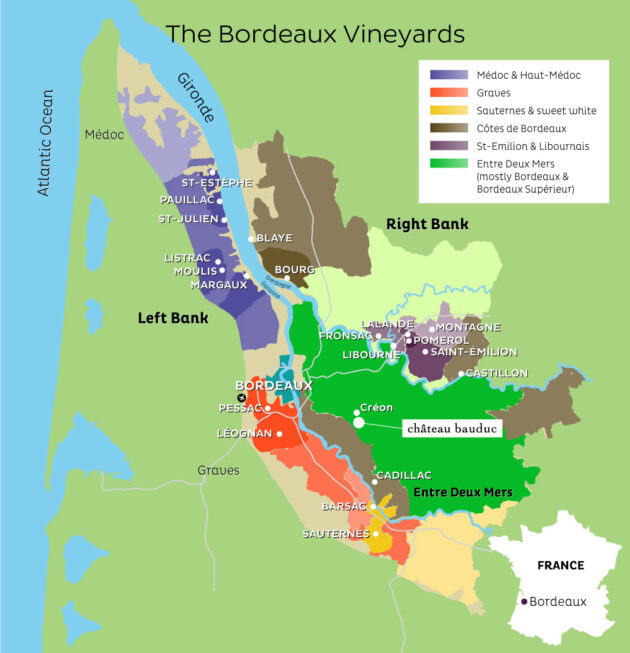
The vineyards pictured below are in Pauillac, Saint-Estèphe and Saint-Julien on the ‘left bank’ (of the Gironde estuary). And in Saint-Émilion and Pomerol on the so called ‘right bank’ (of the Dordogne river?). Anyway, they’re five of the top appellations.
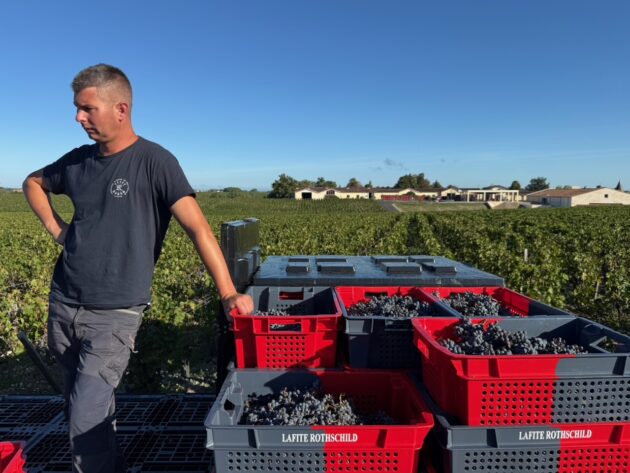
And if we start with top appellations we may as well have a look at one of the top names.
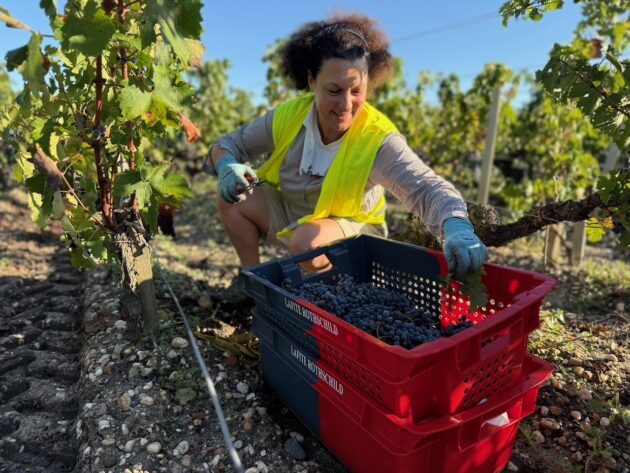
The new crates or cagettes are an exciting new development at Château Lafite Rothschild. Similar ones have been in use at fellow Pauillac First Growths Mouton Rothschild, Latour and at Château Margaux for a while.
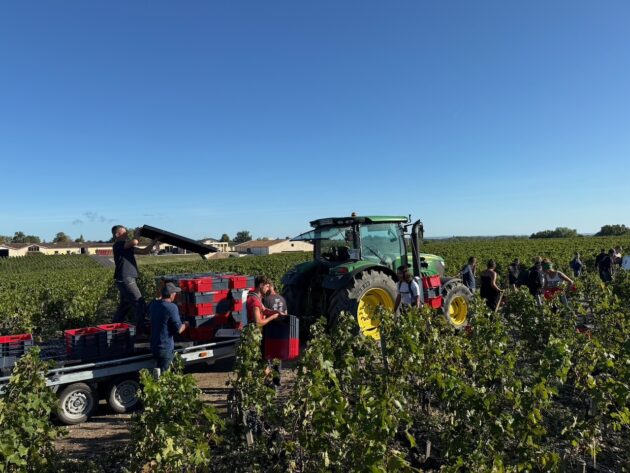
The new winery at Lafite in the distance has been off limits for some years. Eric Kohler, who heads up the operation, told me they’re still building and adjusting things there so visitors aren’t allowed.
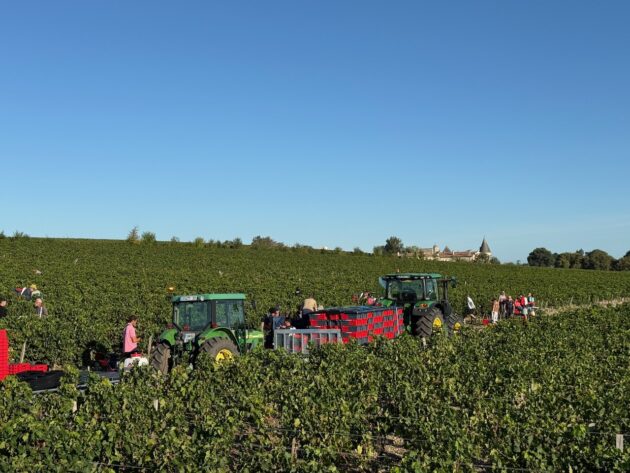
Unusually they were harvesting both Merlot and Cabernet Sauvignon at the same time – though the Cabernet bunches were only from the young vines which ripen earlier.
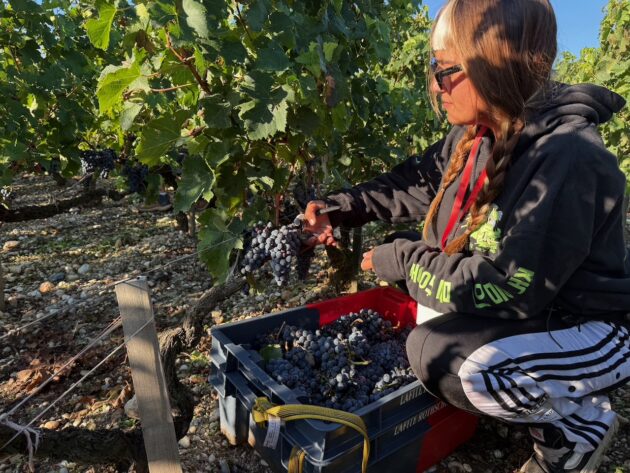
This – and the pictures above and below – was in the Merlot block which can be seen from the famous D2.
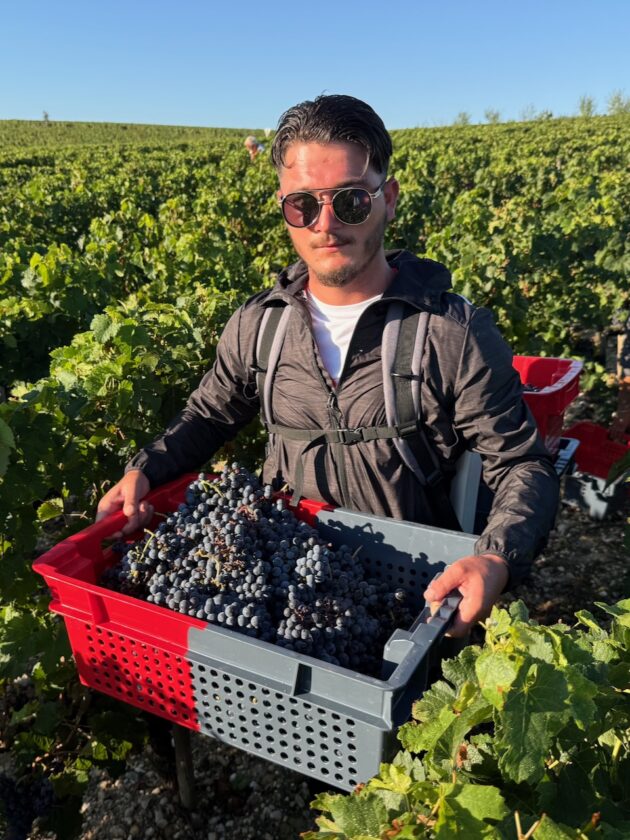
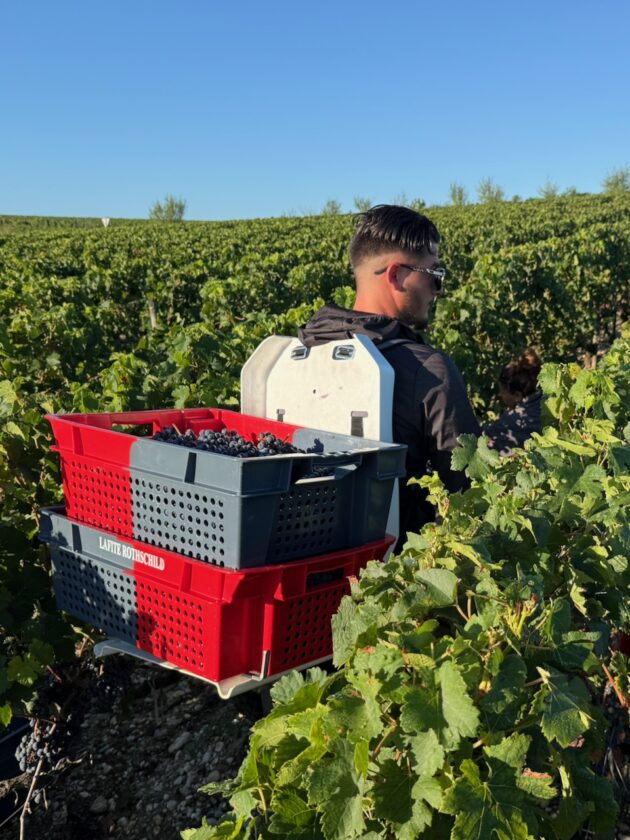
A candidate for the coolest looking porter, making light of a heavy load when fully charged.
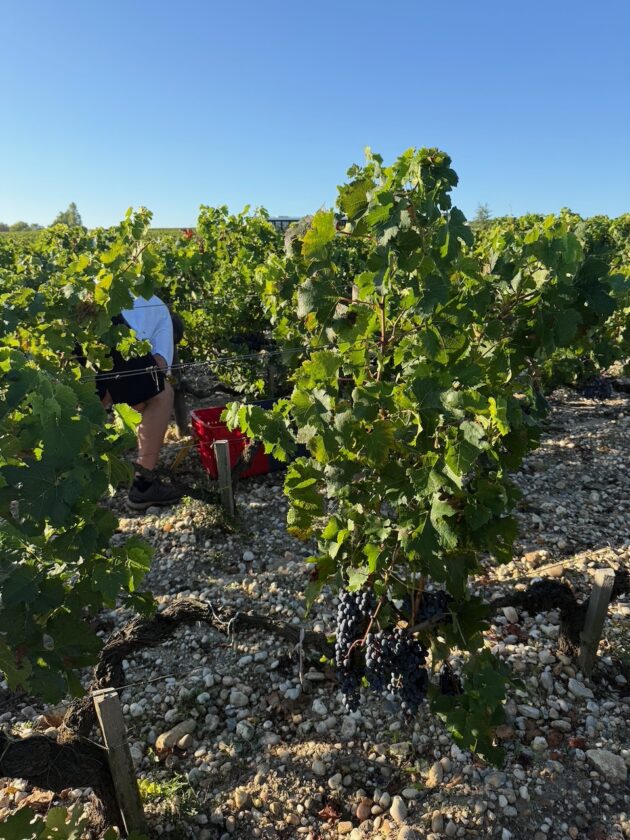
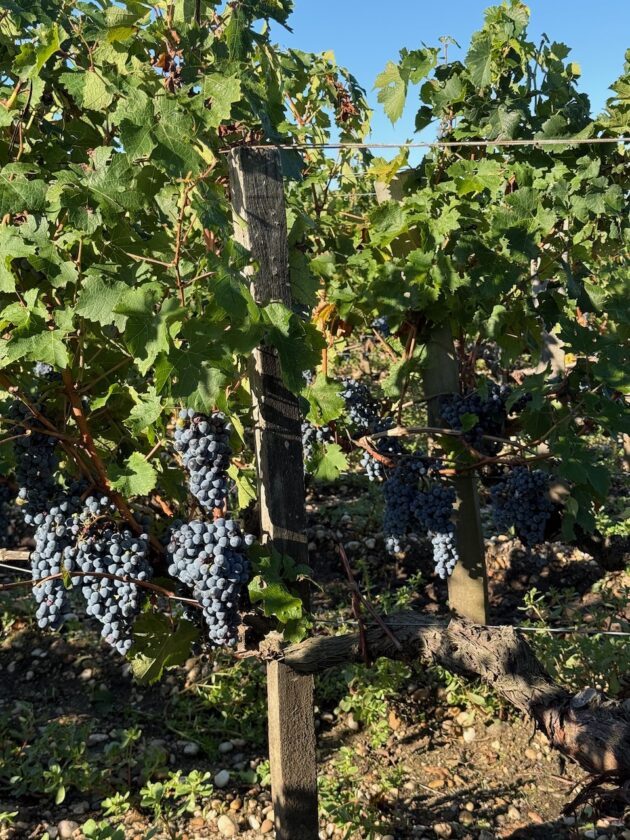
Terroir envy: Merlot on the left, Cabernet Sauvignon on the right. The Cabernet from older vines – and in the better plots – make up the vast majority of the Grand Vin. (The Grand Vin in this instance refers to Château Lafite Rothschild as opposed to the second vin, Carruades de Lafite.)
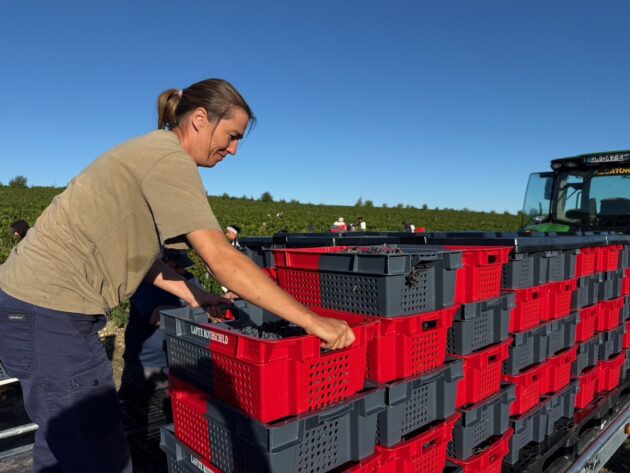
Colour coded for easier stacking.
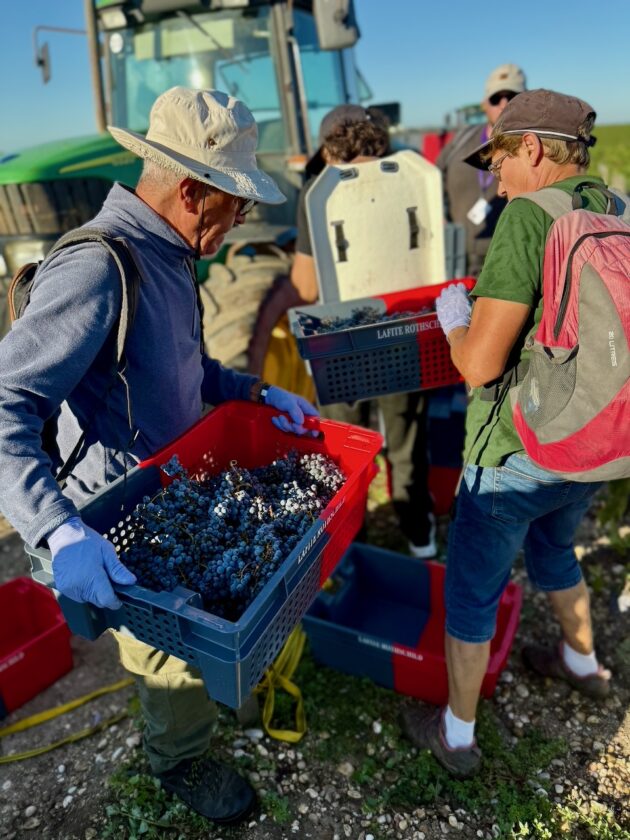
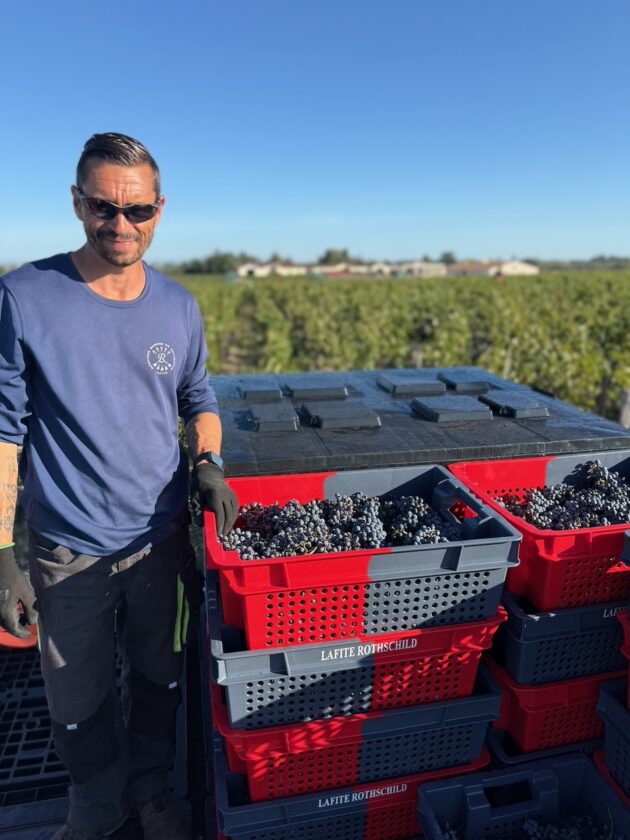
They’re getting the hang of it. This was on 3 September 2026.
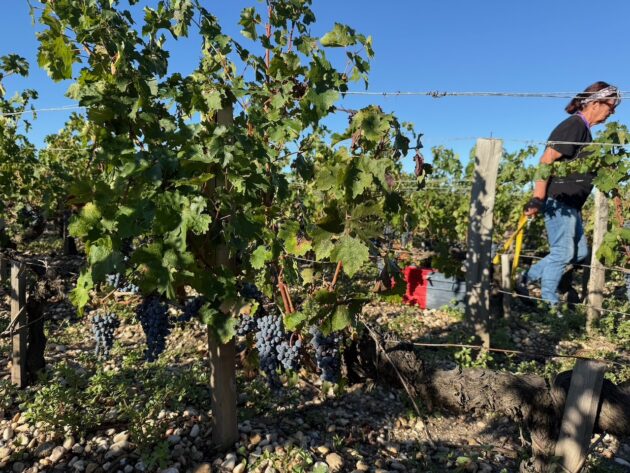
These crates can be dragged too, albeit on stony ground.
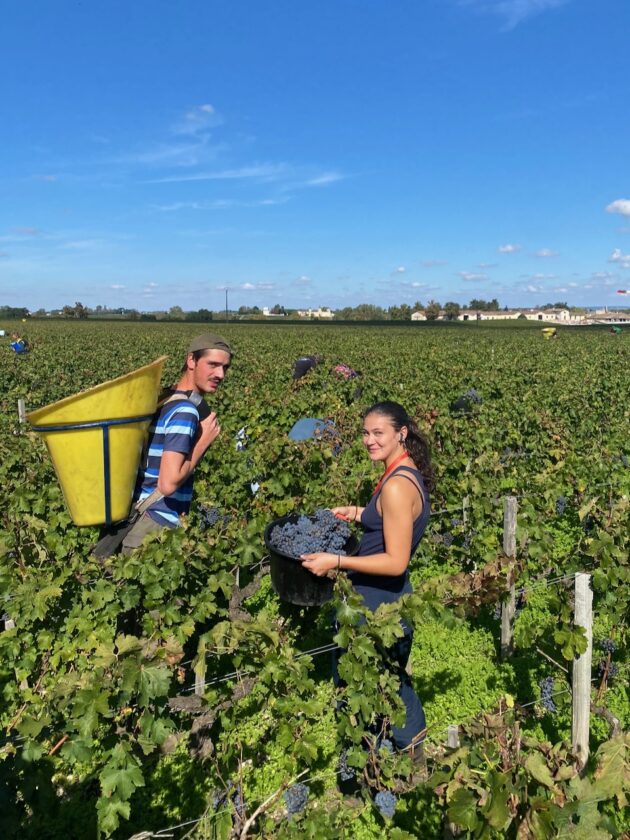

The old system of emptying buckets or seaux with bunches of grapes into hottes is still widely used.
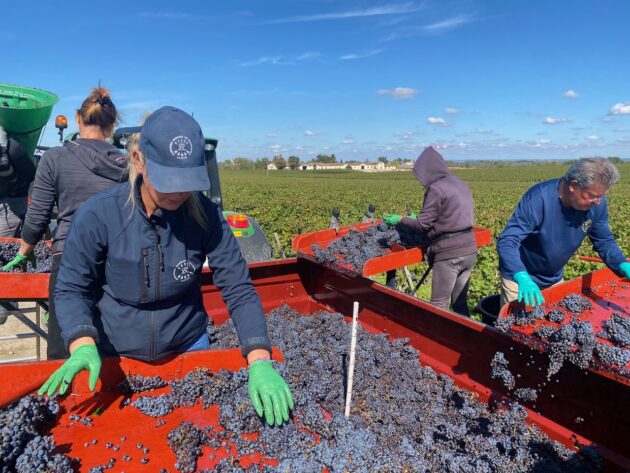
But Lafite had their own adapted trailers with mini sorting tables on the side, so I’ll miss those. This was the 2024 vintage.
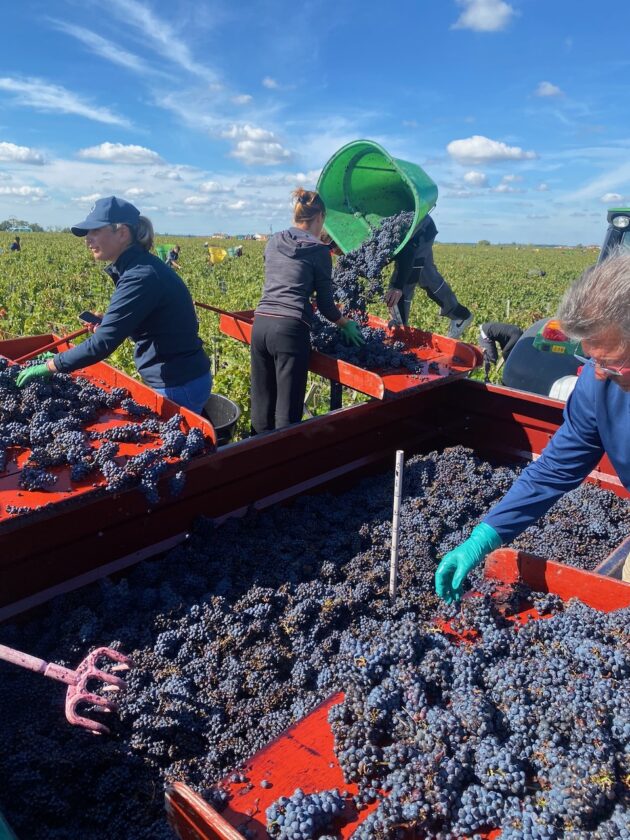
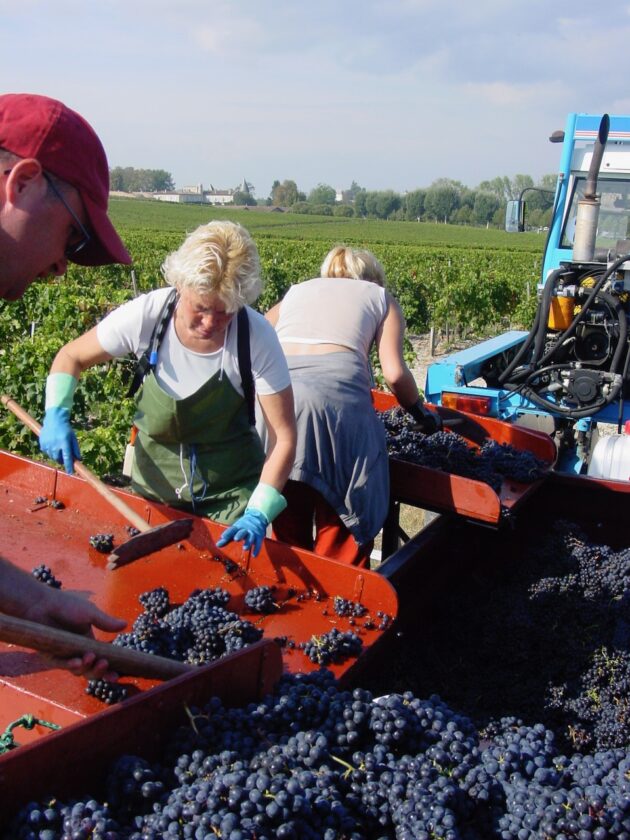
A couple of photos from the Quinney archives: 4 October 2024, left, and – 20 years earlier – on 5 October 2004, right.
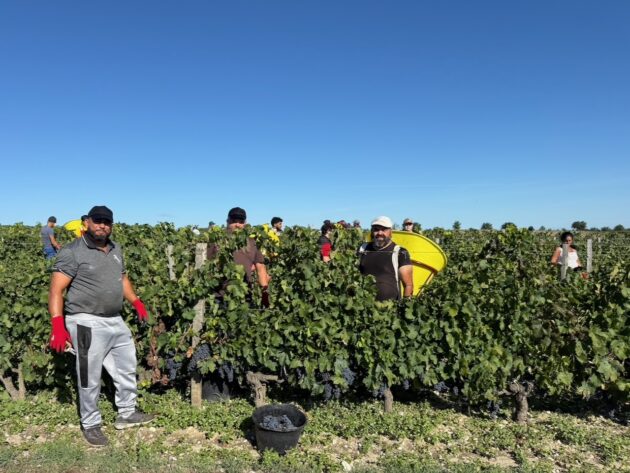
A few kilometres up the road and these burly looking chaps were harvesting handsome Merlot at Château Meyney in Saint-Estèphe, next to Château Montrose.
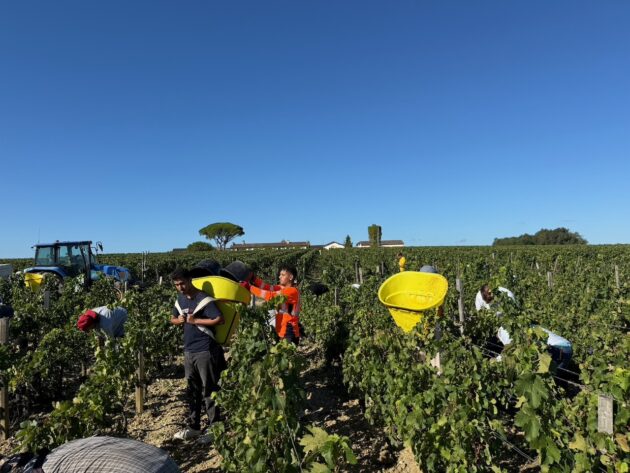
It’s the classic seaux et hottes routine here.

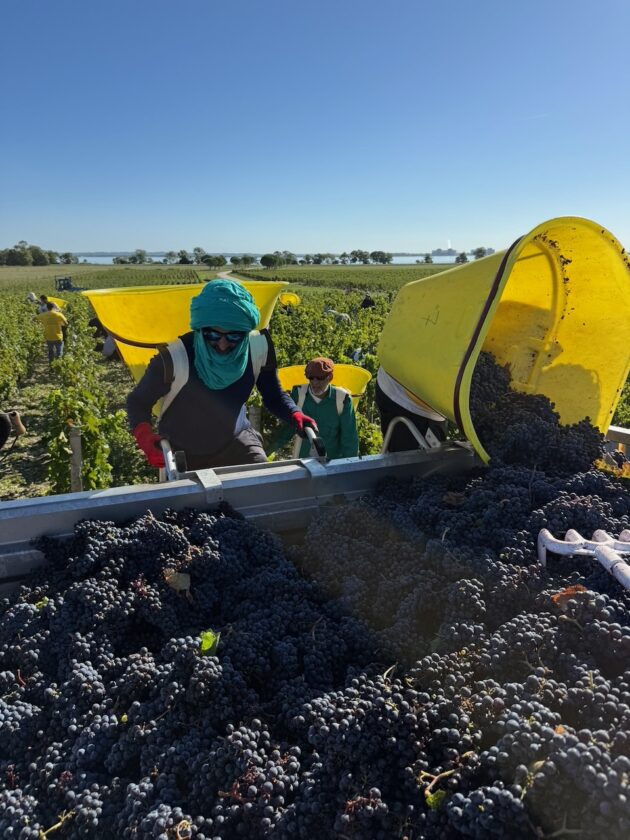
The vineyard overlooks the Gironde estuary, in the distance, on the right.
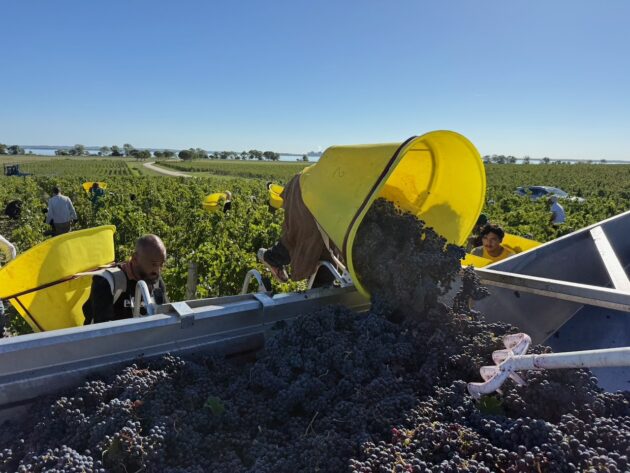
It’s a straightforward, satisfying system of hand harvesting but being a porter isn’t advisable if you have a dodgy back.
Château Meyney, in the background, is a fairly famous name which offers great value for money, by the way. Director Anne Le Naour has done a great job with the estate. With a good vintage like 2020, for example, you’d get 2 dozen bottles for one of Lafite. (Around £200 for a case of 12 versus £2,400, before duty and VAT.)
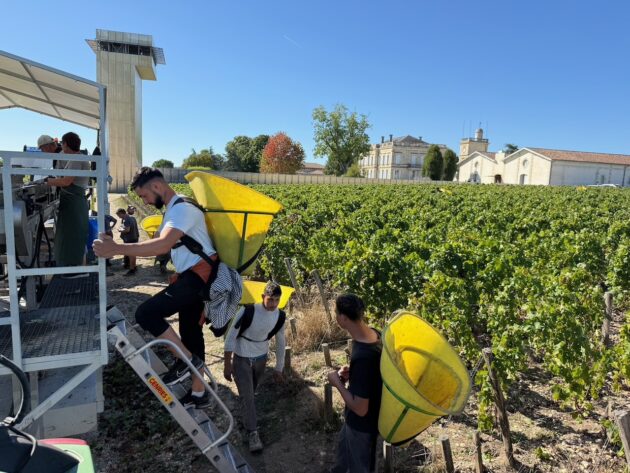
Each château has its own way of doing things, of course. This is Château Gruaud Larose in Saint-Julien. I’ve been up the modern tower on the left and it’s worth a visit for the extensive views (of quite a lot of vineyards, unsurprisingly).
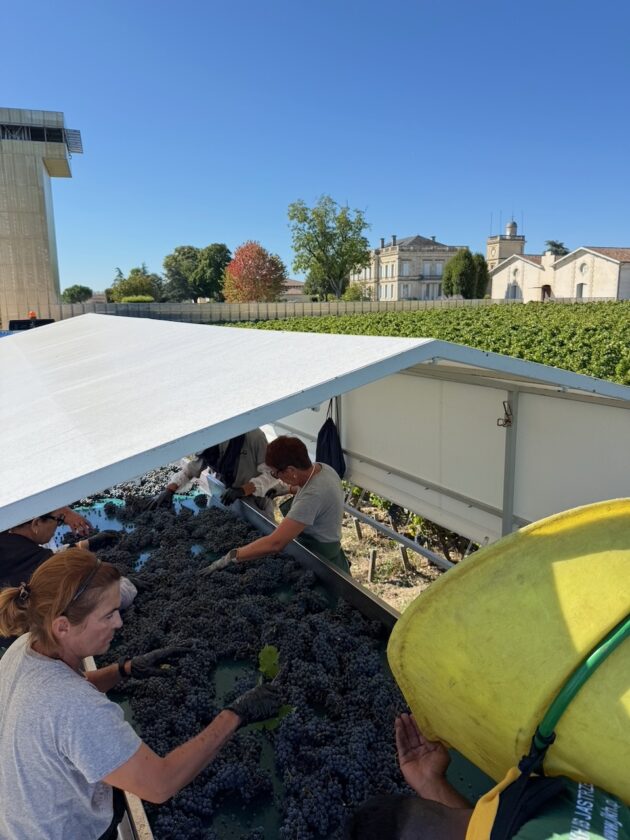
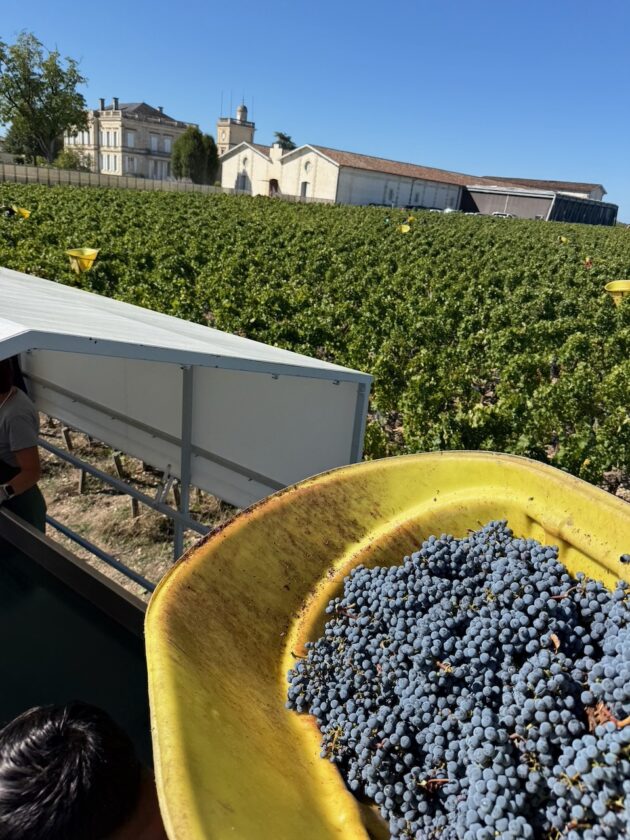
The bunches are tipped onto an outdoor, covered sorting table.
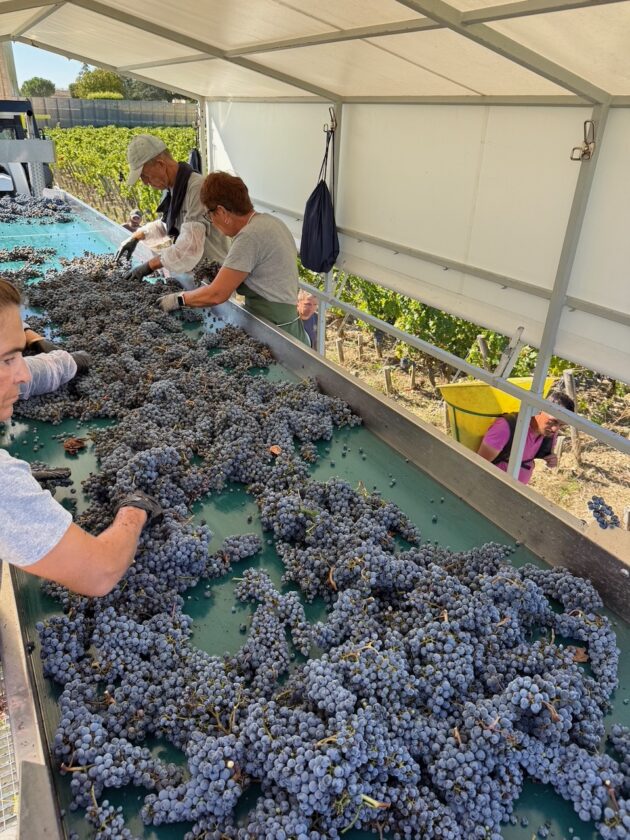
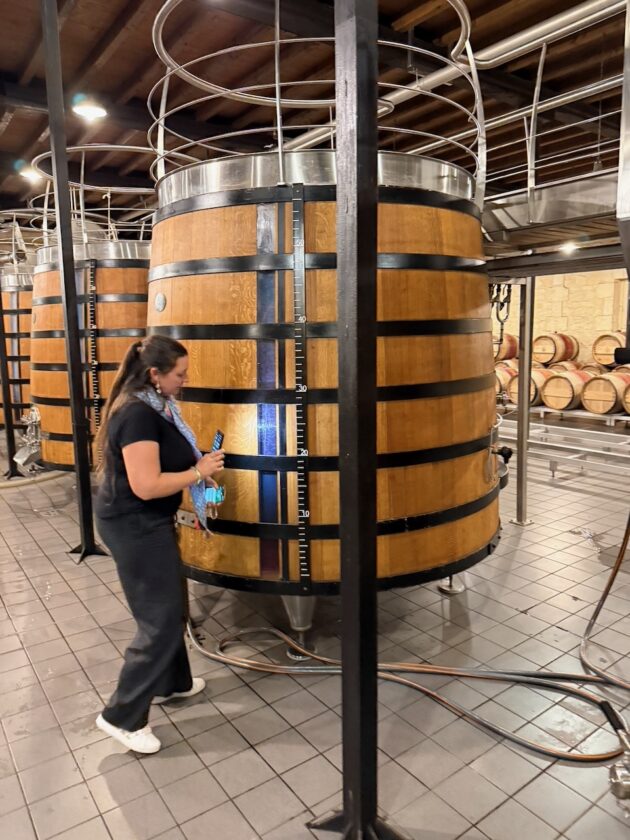
Technical director Virginie Sallette recognised me when I asked if I could take some photos and kindly gave us a quick tour inside.
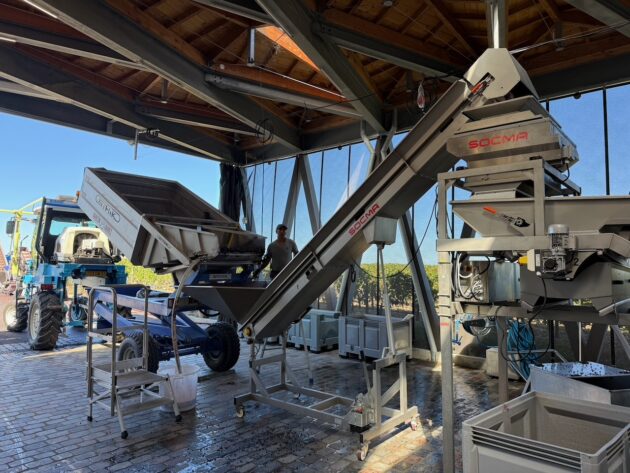
The bunches go into the de-stemmer…
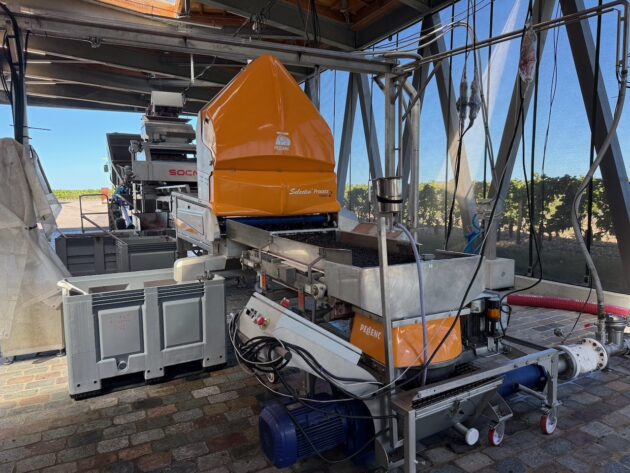
… before the optical sorter.
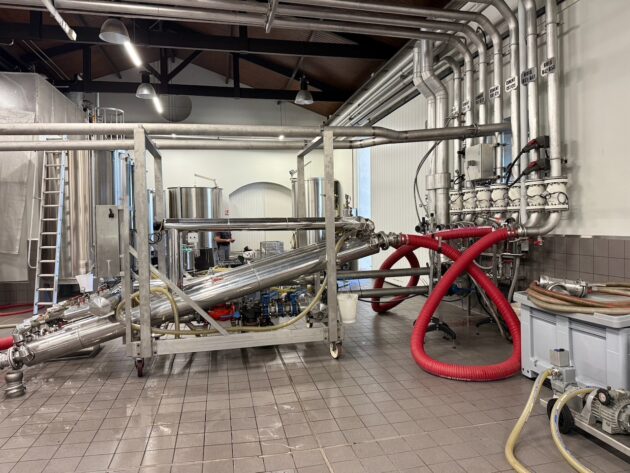
There’s always a lot of kit.
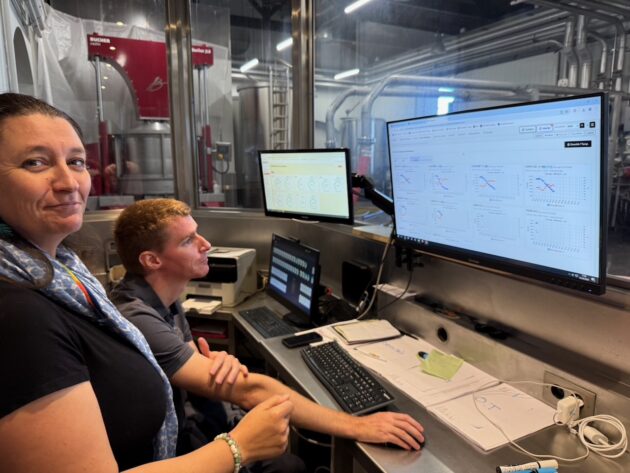
Virginie is particularly keen on the software they have for overseeing the vinification and progress of each cuve or fermenting vat.
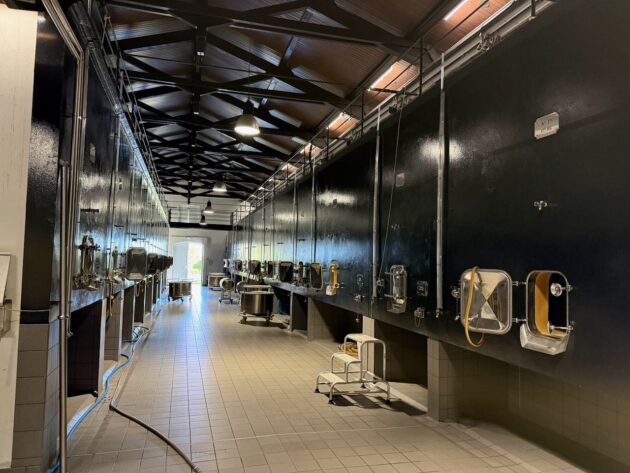
Concrete vats are popular, as well as the more commonplace stainless steel.
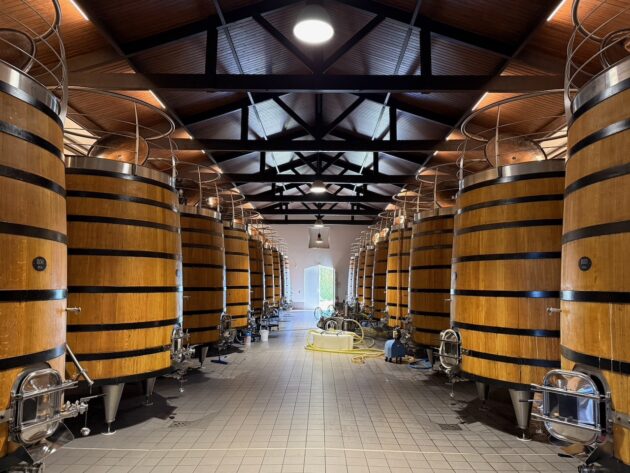
And large oak fermentation vats are important for many great Bordeaux reds.
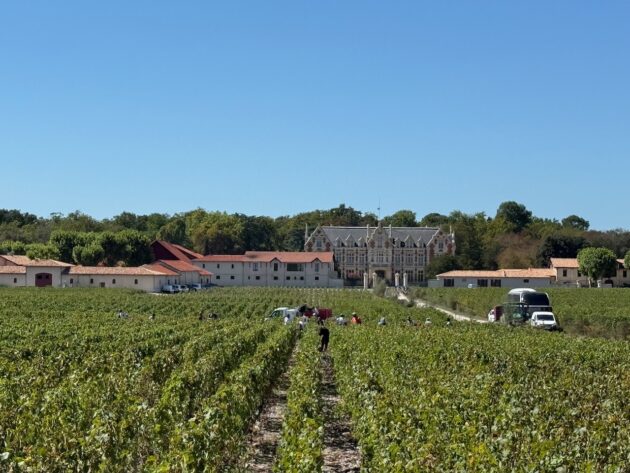
I don’t usually take many photos of the actual châteaux during the harvest, but here – to the south of those above – is Château Cantenac Brown in Margaux. It’s probably unfair to think of the building as a French version of Hogwarts, because the wine is pretty good.
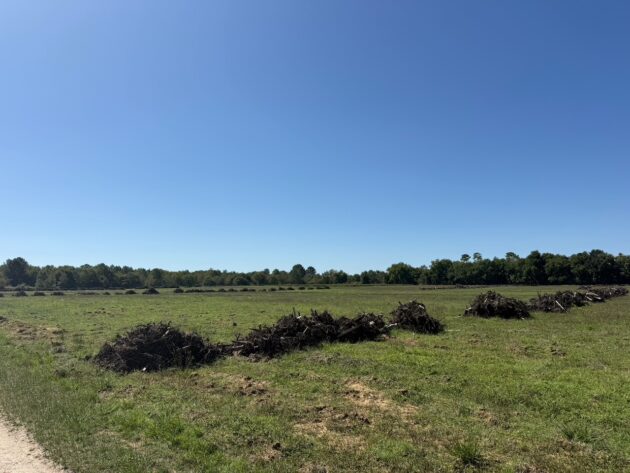
It’s not all a bed of roses of course. This is in the Médoc appellation north of Saint-Estèphe and it was a surprise to see that Château Preuillac, once a moderately successful Cru Bourgeois, had pulled up half its 26-hectare vineyard, according to a member of staff there.
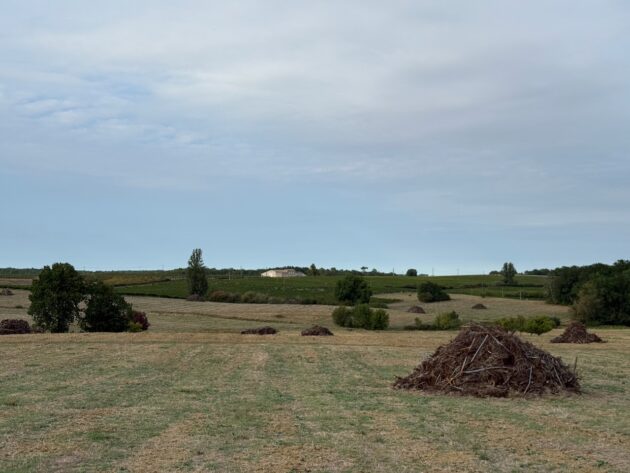
This is a common theme in the Entre-deux-Mers too, and beyond. Growers who do a neat job of pulling up vines and maintaining the land deserve credit. Far worse are the endless plots of abandoned vineyards.
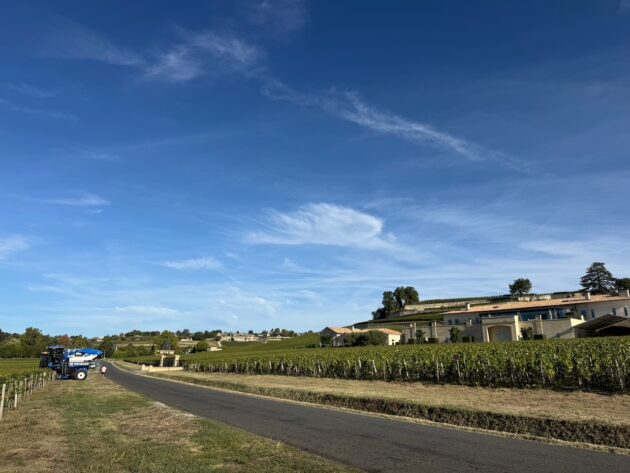
It can be a fine line between the great and the merely good. Château Pavie is one of two Saint-Émilion Premier Grand Cru Classé ‘A’ estates – the other being Château Figeac. Just over the road the Saint-Émilion vines are being harvested by machine. Nothing wrong with that – of course – but it’s in fairly stark contrast to the acute attention to detail and no expense spared at Pavie.
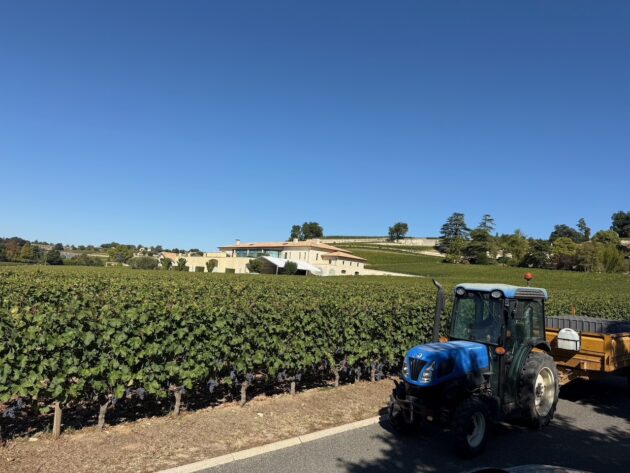
The Cabernet Franc vines at Château Pavie looked in very good shape at the end of last week (25 September).

The commercial director kindly gave me permission to take some photos of the harvest and the winery. (I accosted the poor fellow in the car park as he arrived at work.)
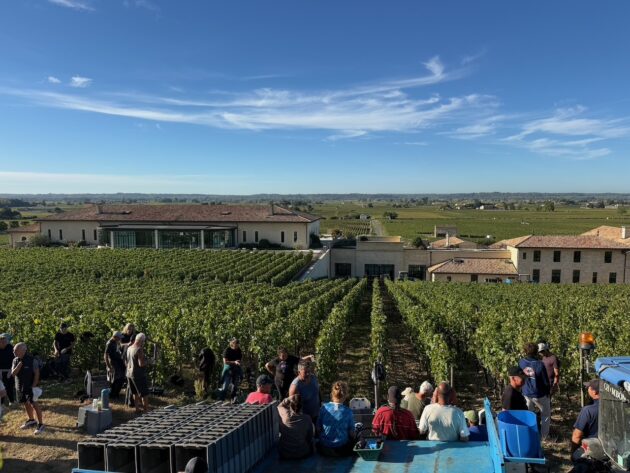
The chap in charge of the harvest team kindly gave me a coffee and a custard tart as they took a break.
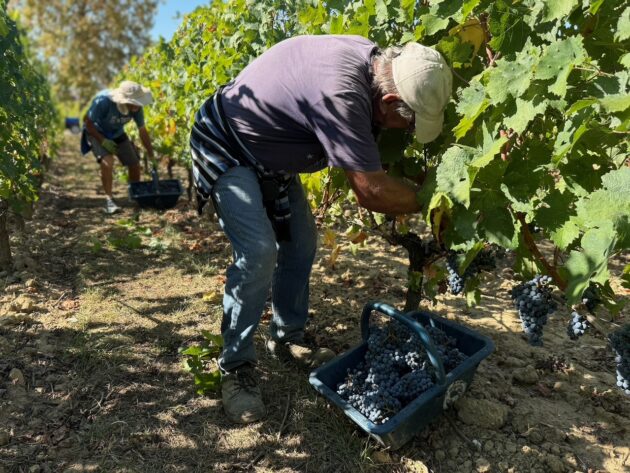
Cabernet Franc now plays a major part in the wine, as well as Merlot. Top Saint-Émilion wines with a good proportion of Cabernet Franc include Châteaux Cheval Blanc, Ausone and Angelus.
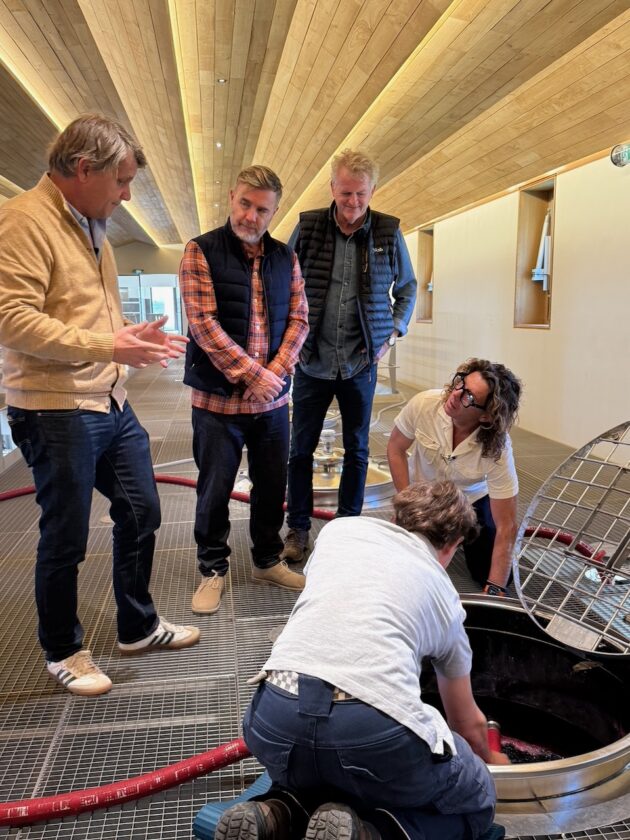
An extraordinary feature of the 2026 vintage is the spread of harvest dates. Contrast the end of September harvest at Pavie and Château Troplong Mondot beginning their Merlot harvest on 19 August. Regular readers may recall we hosted Tom Gilbey and Gary Barlow for a tour of Bordeaux vineyards, and Aymeric de Gironde kindly gave us lunch at Troplong Mondot. Our photo journal of the trip is here or you can find it on Tom Gilbey’s YouTube channel.
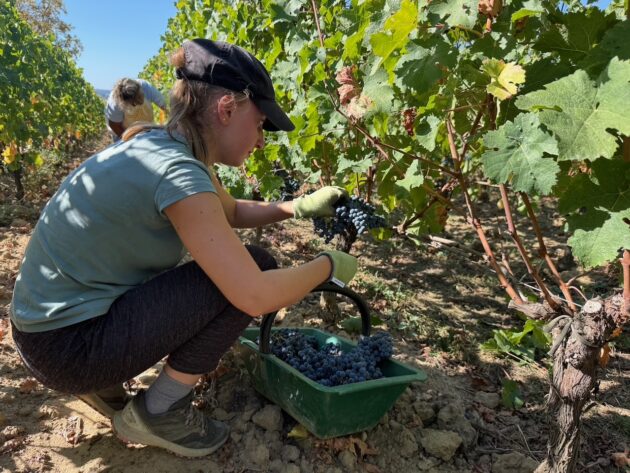
Even in many years you can’t really wear trainers at the end of September. It’s usually too muddy. (Writing this on 30 September and it’s just started raining.)
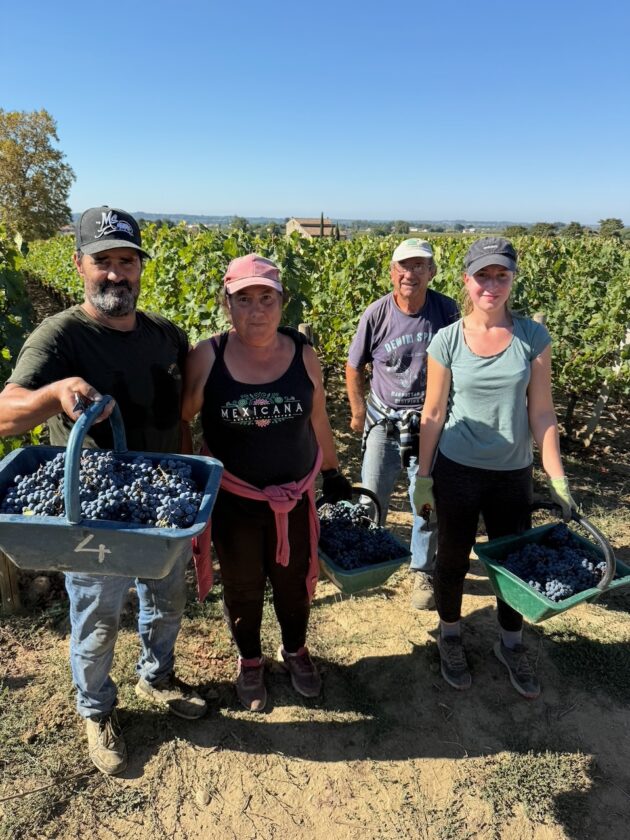

Grapes in harvest baskets…
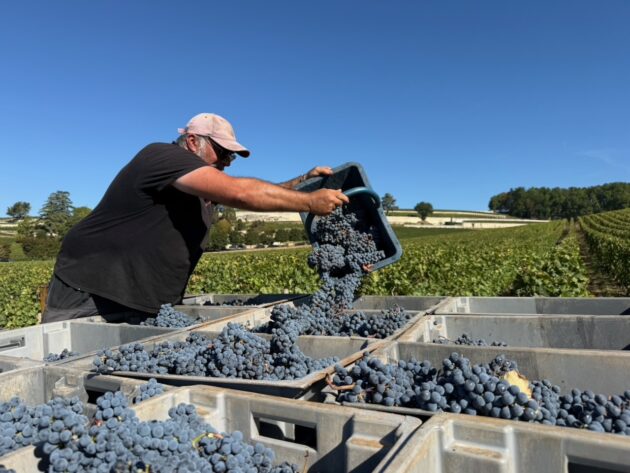
Which then go into deeper, stackable boxes.
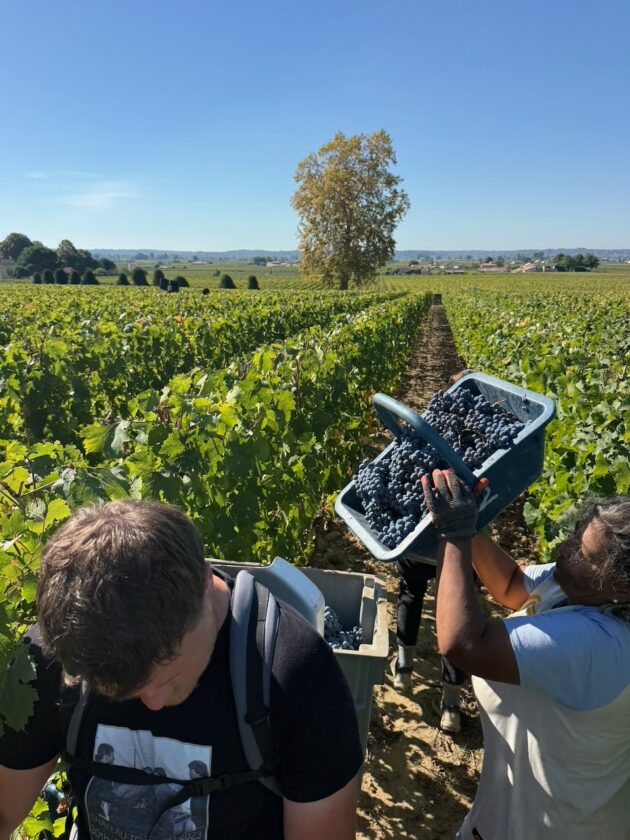

Straight to the reception area in the winery.
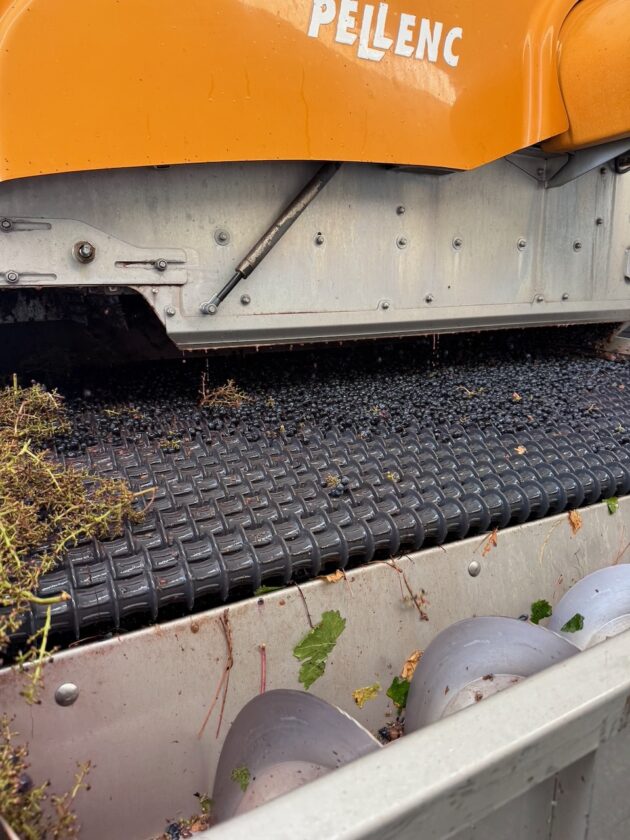
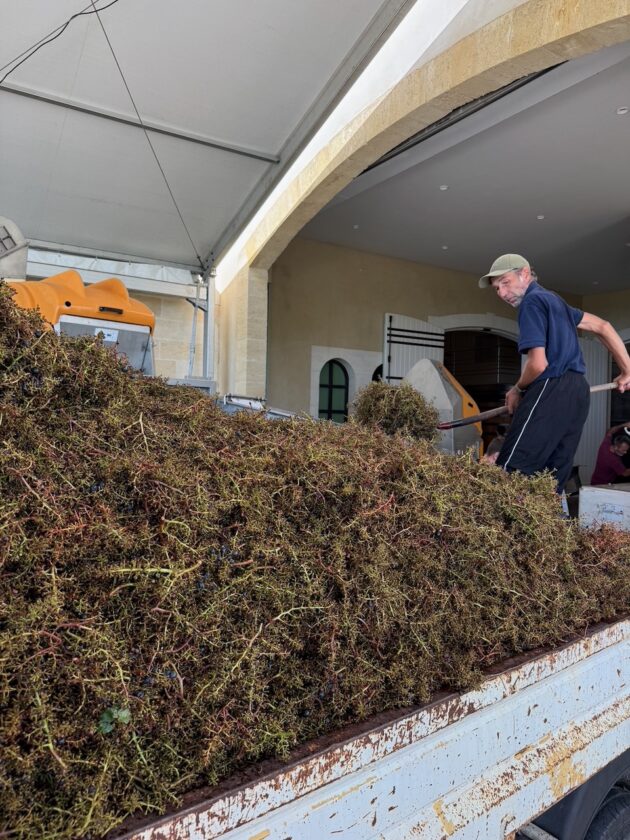
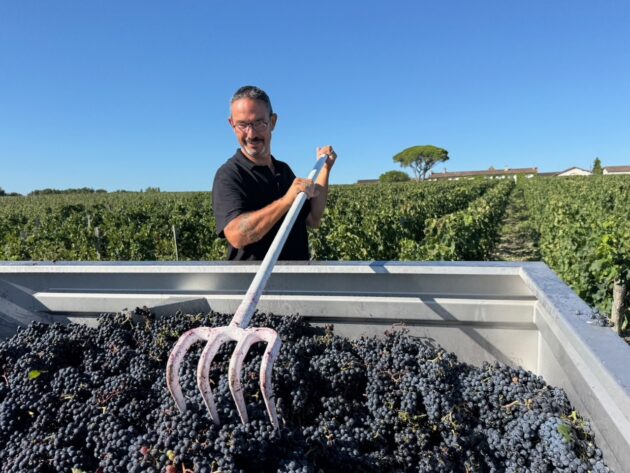
The bunches are de-stemmed and there’s a full time job for someone with a pitchfork.
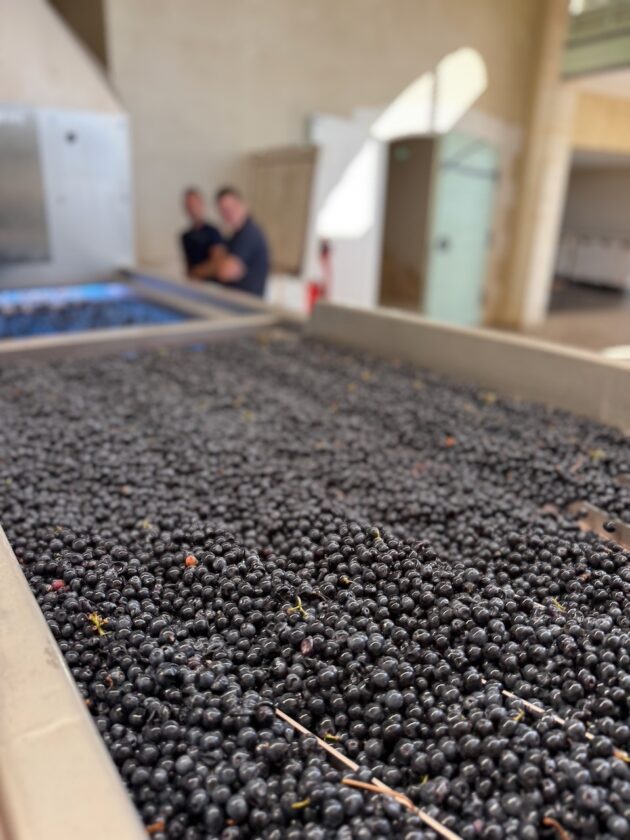
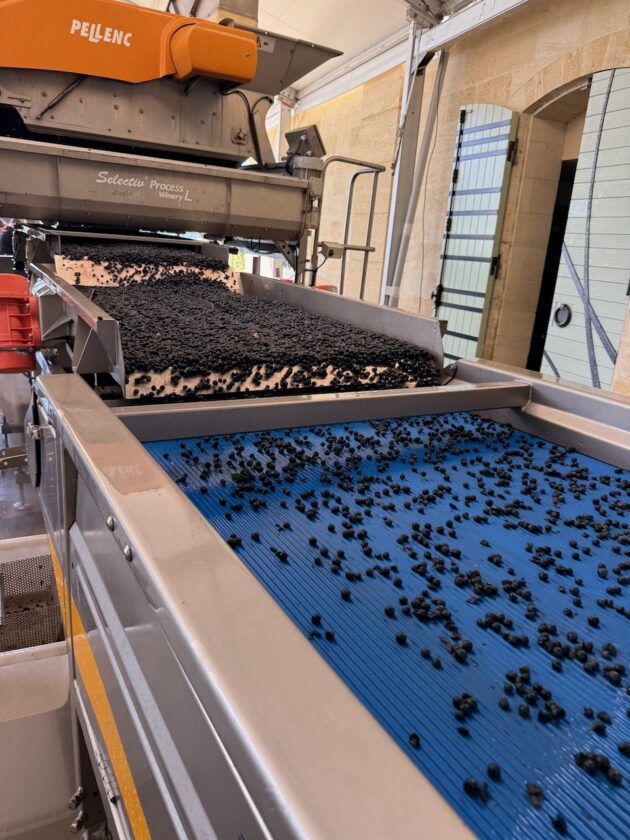
You don’t really get an idea of how quickly the grapes are moving through the optical sorter.
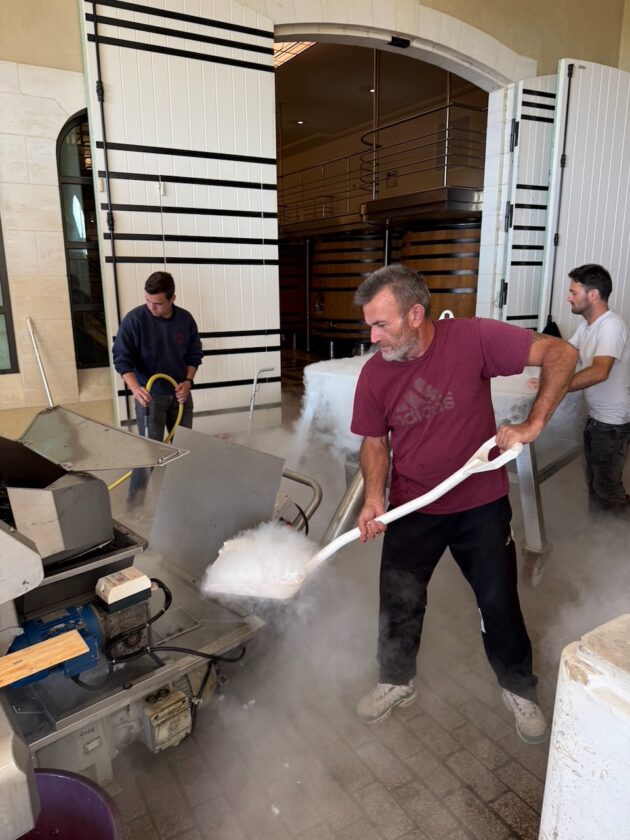
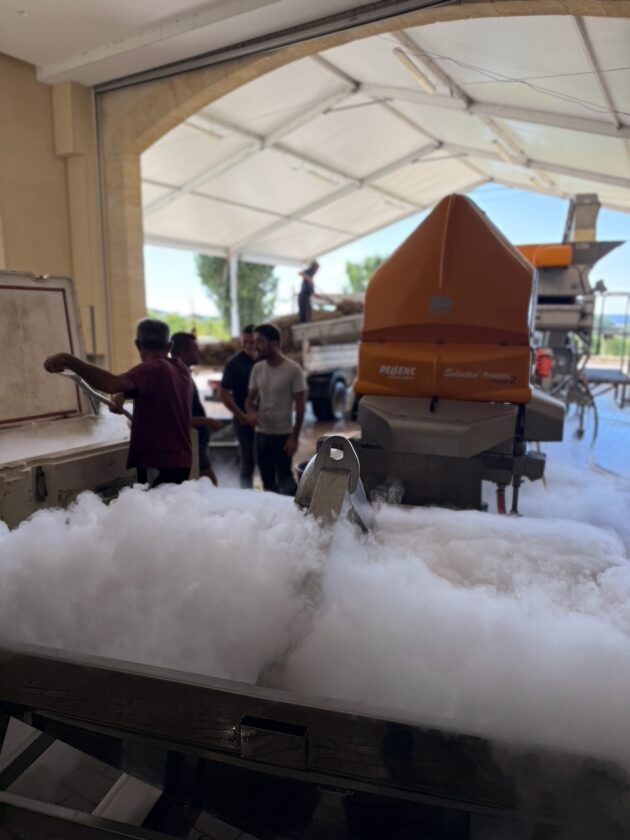
Dry ice (or carboglace) shovelled in with the grapes to chill them down.
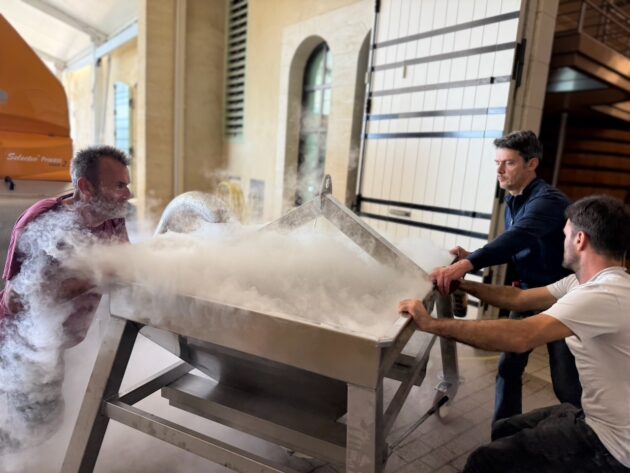
The grapes go into a mobile cuvon with the rather dramatic effect of the dry ice.
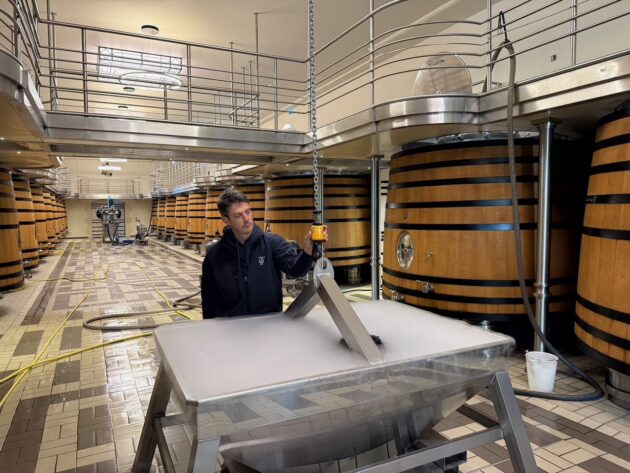
The cuvon full of grapes is hoisted up above the fermentation vat.
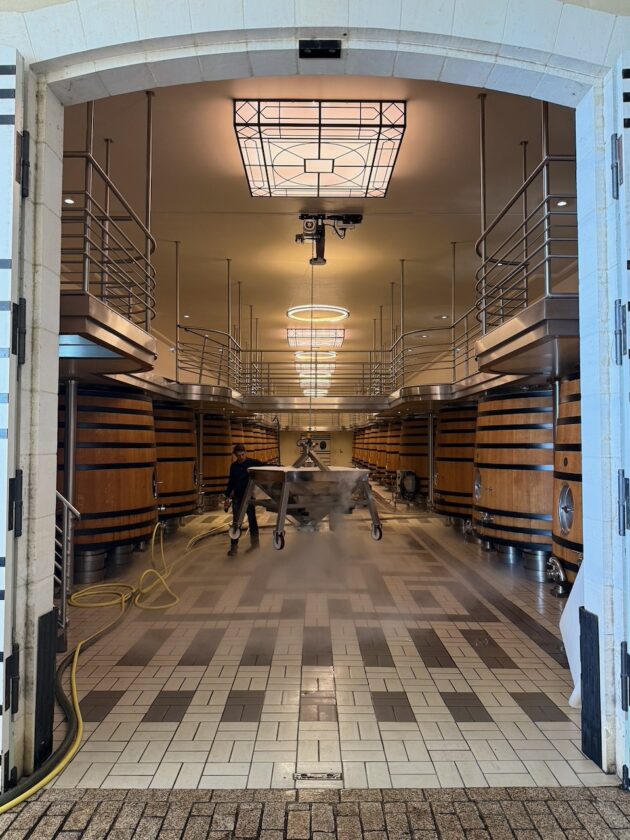
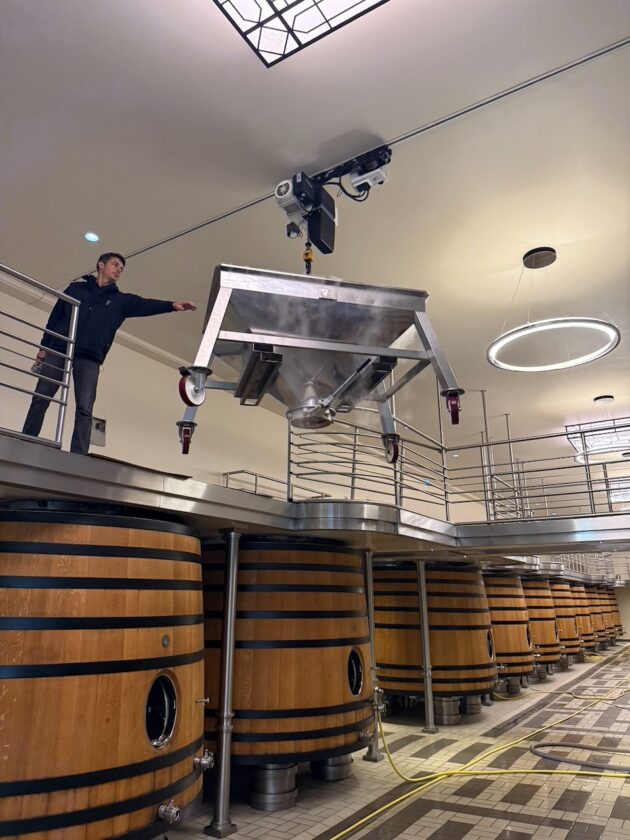
This system, avoiding pumping the grapes and using gravity to drop the grapes into a vat underneath, is commonplace now with new wineries at top or ambitious estates.
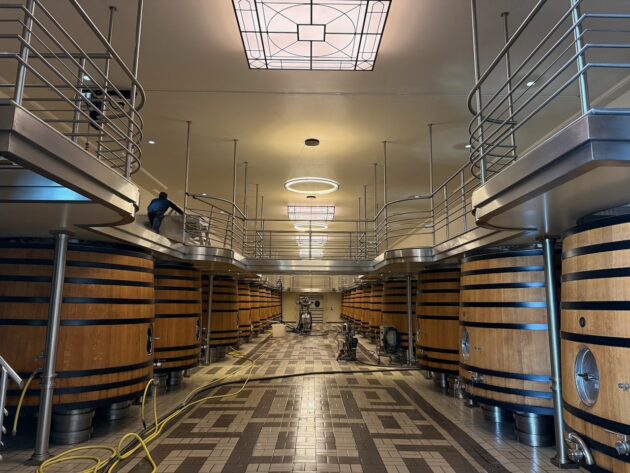
The same would apply whether the fermentation vats are oak, concrete or stainless steel. Pavie is both a top estate and an ambitious one.
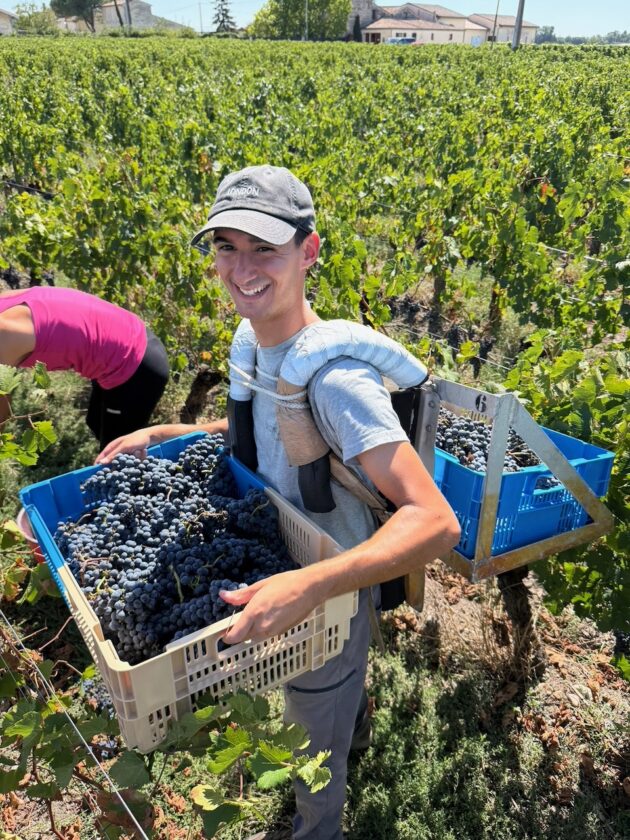
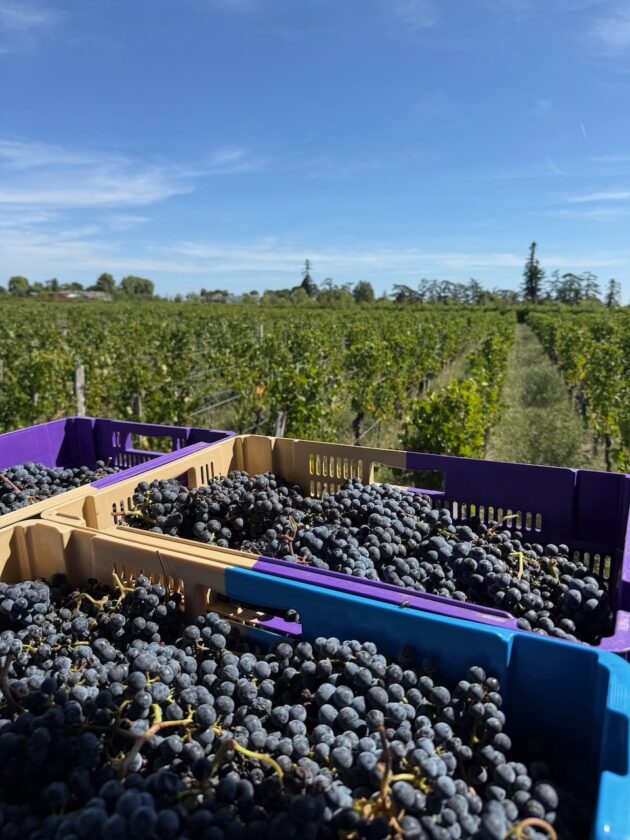
It would be pretty remiss of me not to include a top Pomerol estate or two, given it’s less than half an hour from Bauduc. This is a parcel of Château La Conseillante, bang next to Cheval Blanc in the background, on the right.
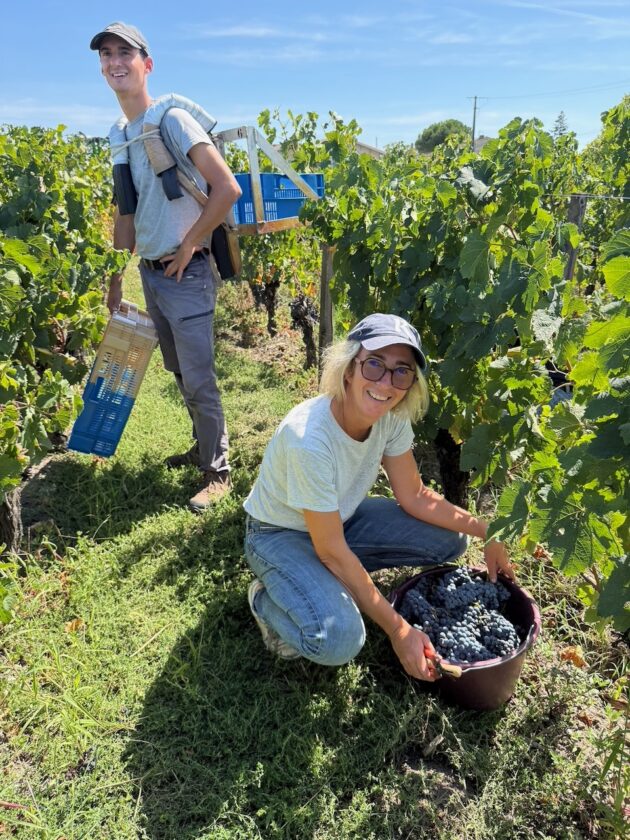
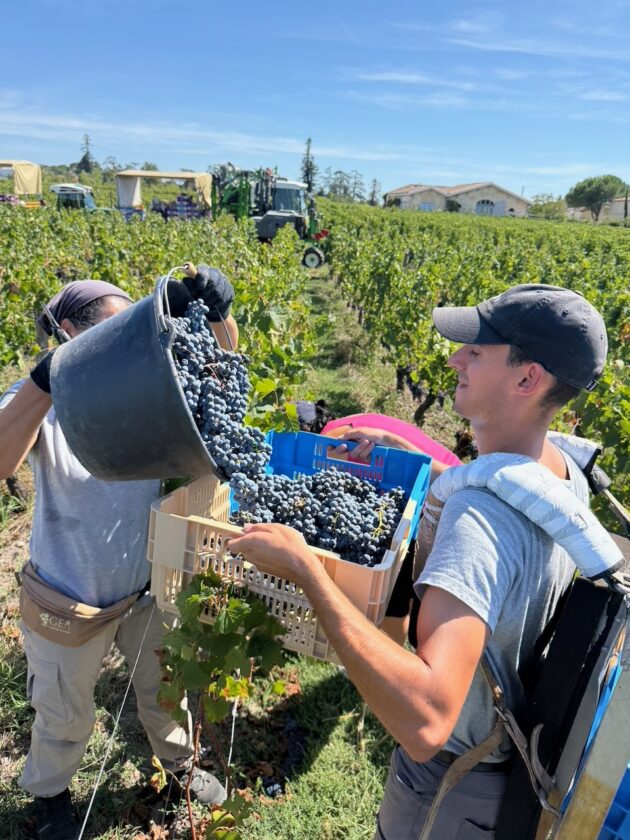
And there picking grapes is the estate director at La Conseillante, Marielle Cazaux. Fair play.
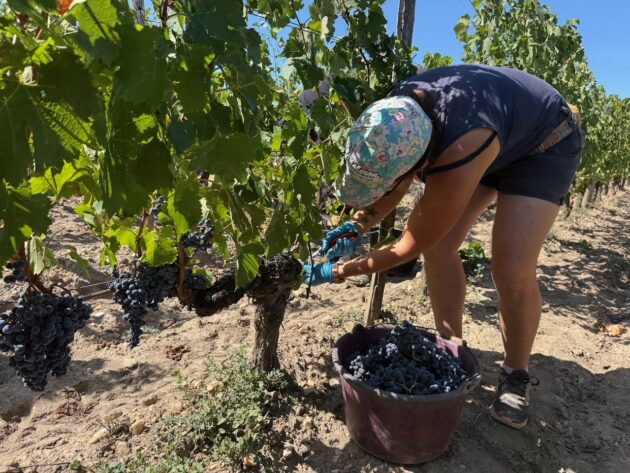
Just up the road and they were harvesting at Vieux Château Certan, which just about every fine wine lover enjoys. (If they can afford it.)
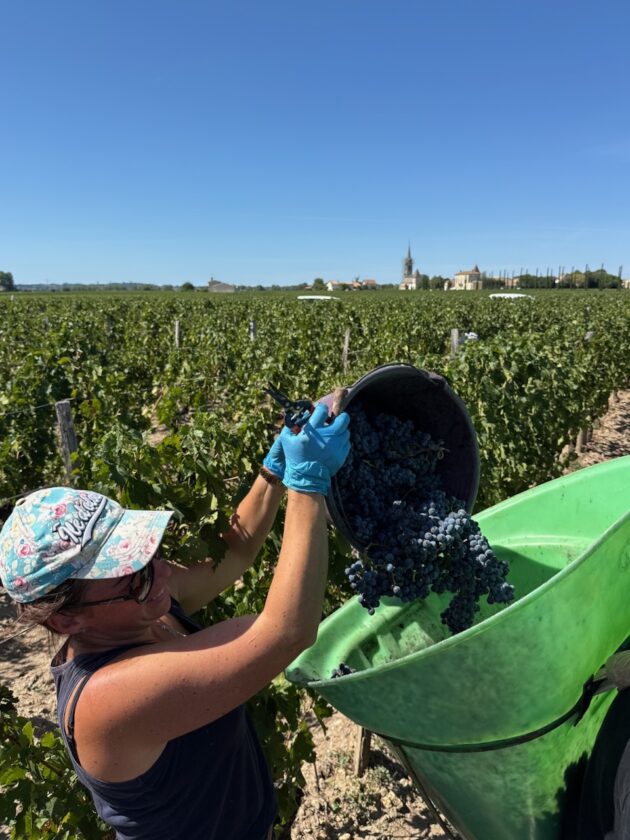
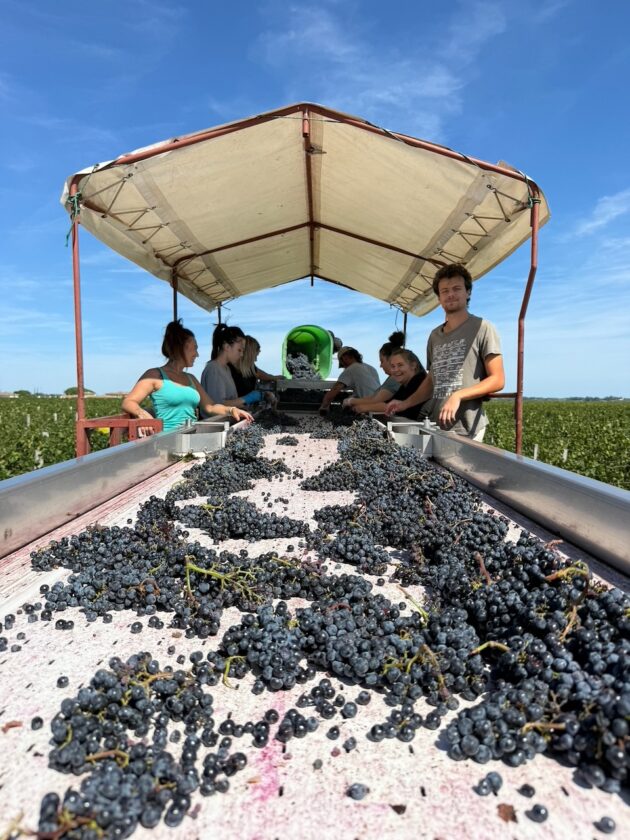
A wonderfully traditional approach, with an exceptional terroir.
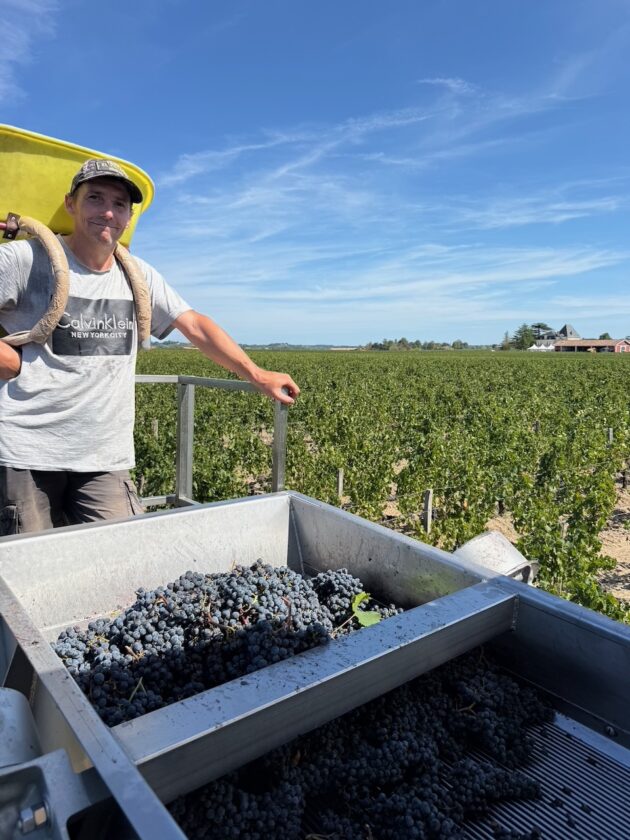

This was Merlot coming in at the start of the month.
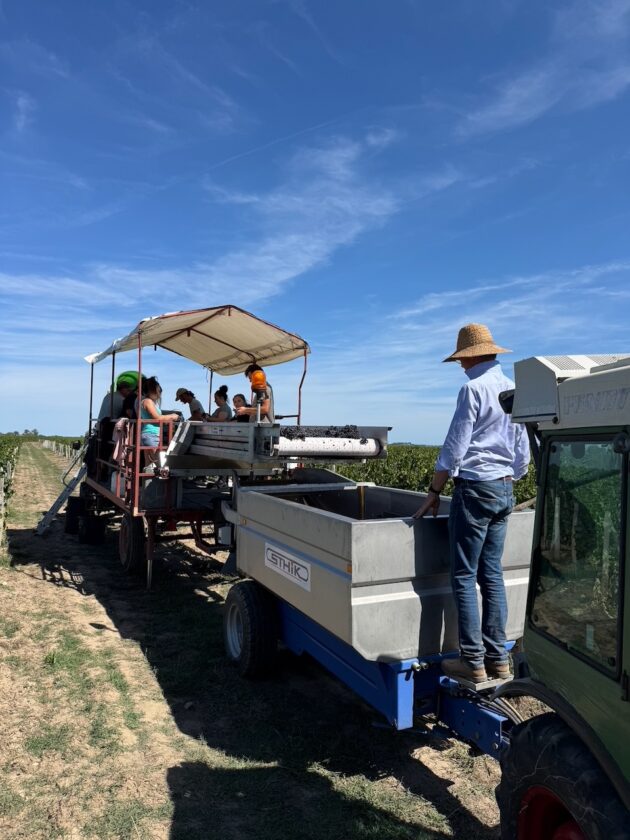
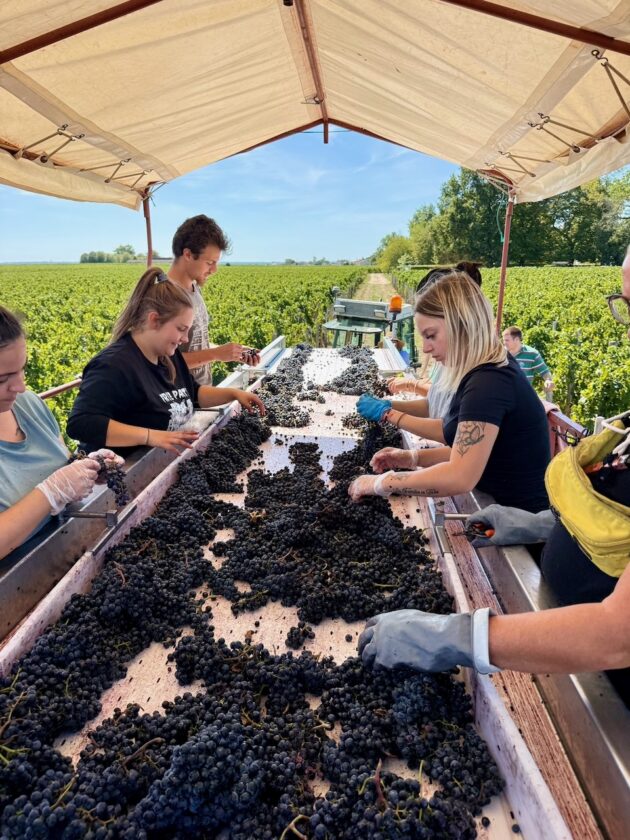
Alexandre Thienpont keeping a watchful eye. He’s never objected to me taking the odd picture, which is kind of him.
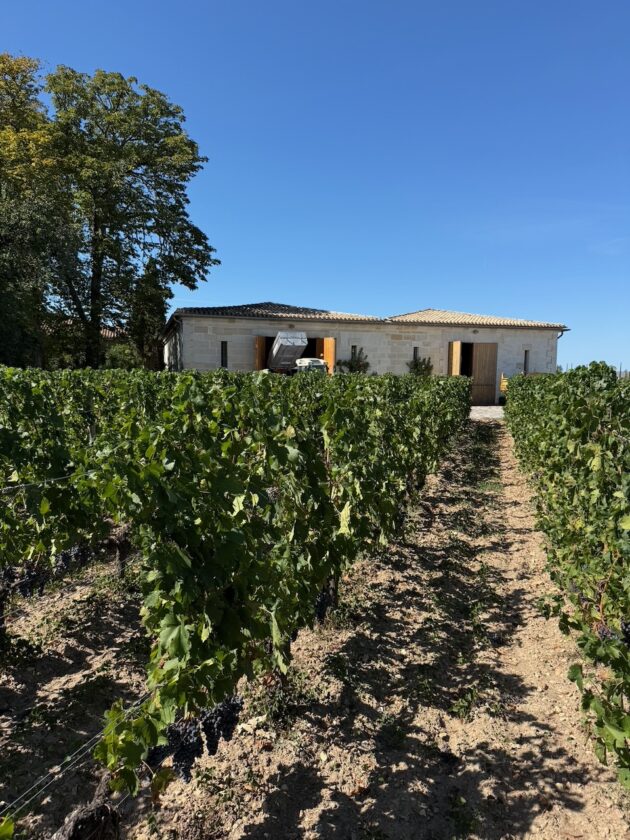
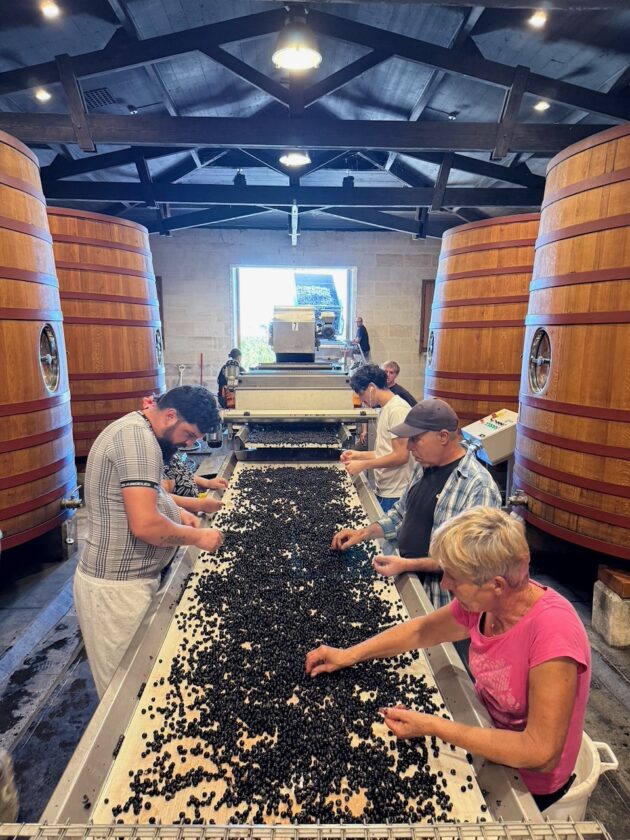
The winery and château is just down the road from Petrus.
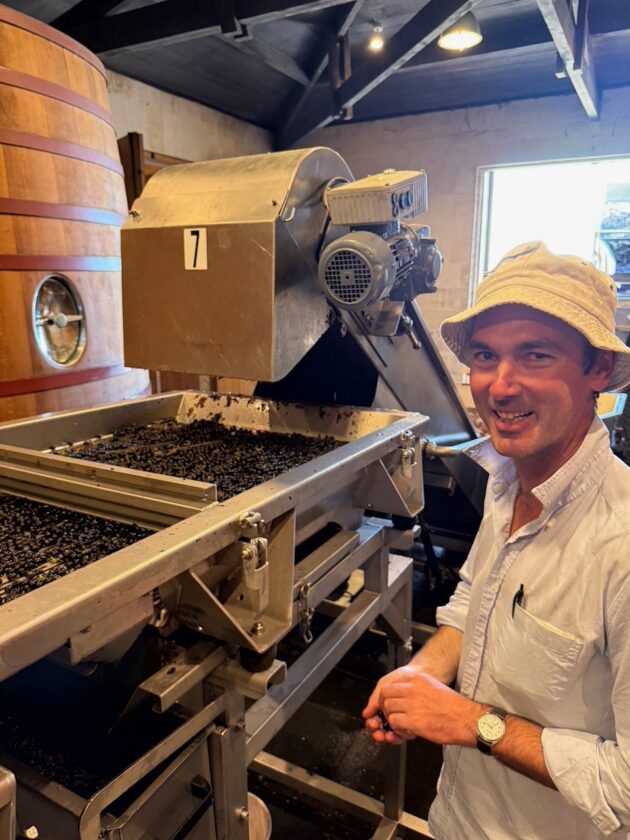
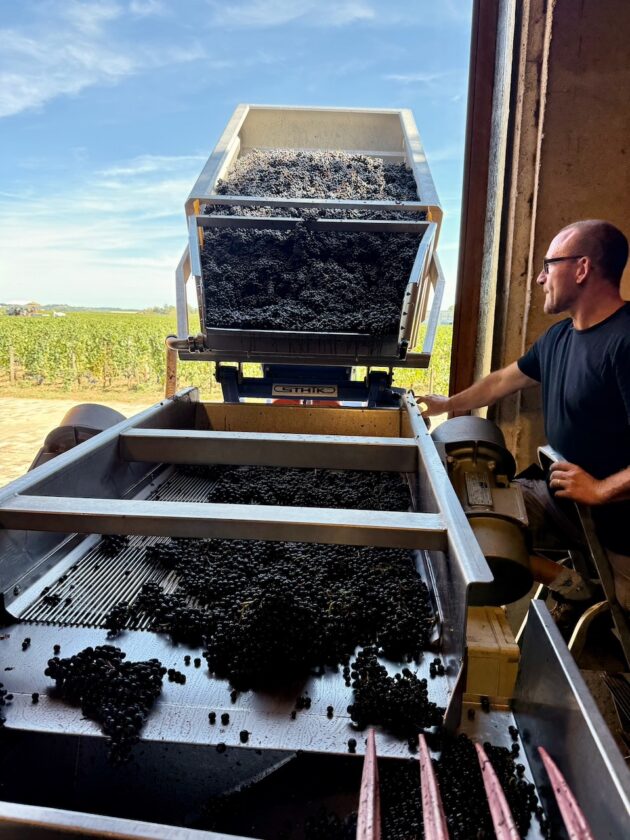
Guillaume Thienpont is an exceptional winemaker – and quietly spoken like Alexandre, his father.
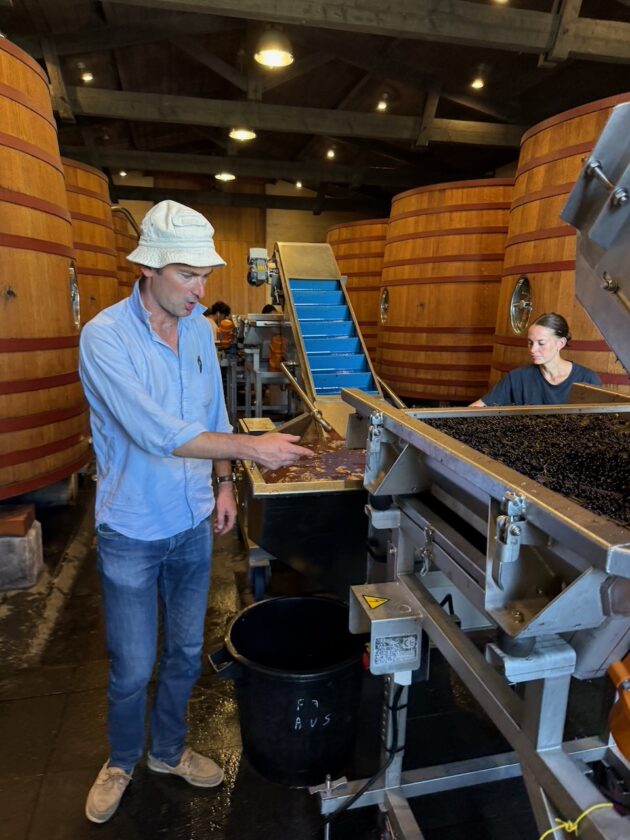
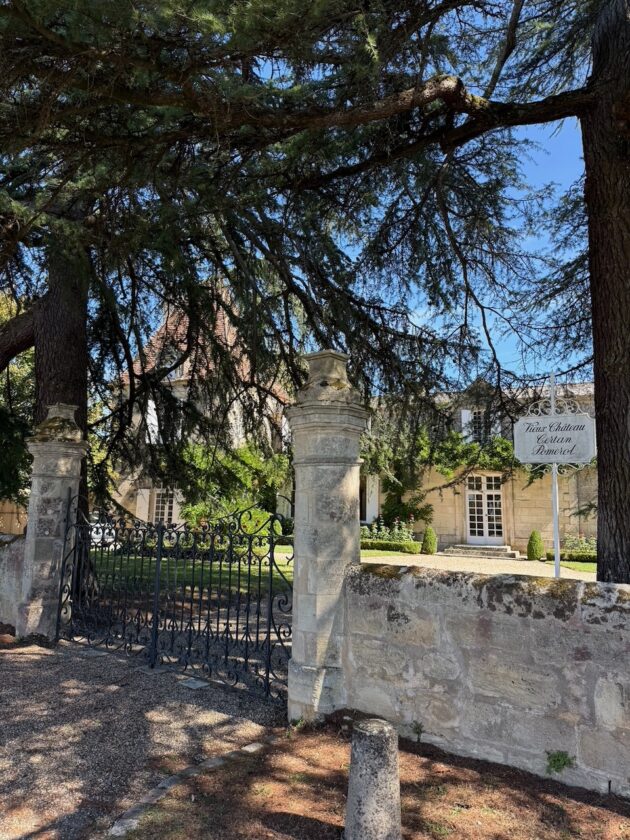
A classic, uncomplicated winery – though with an effective grape sorting system – and a charming château.
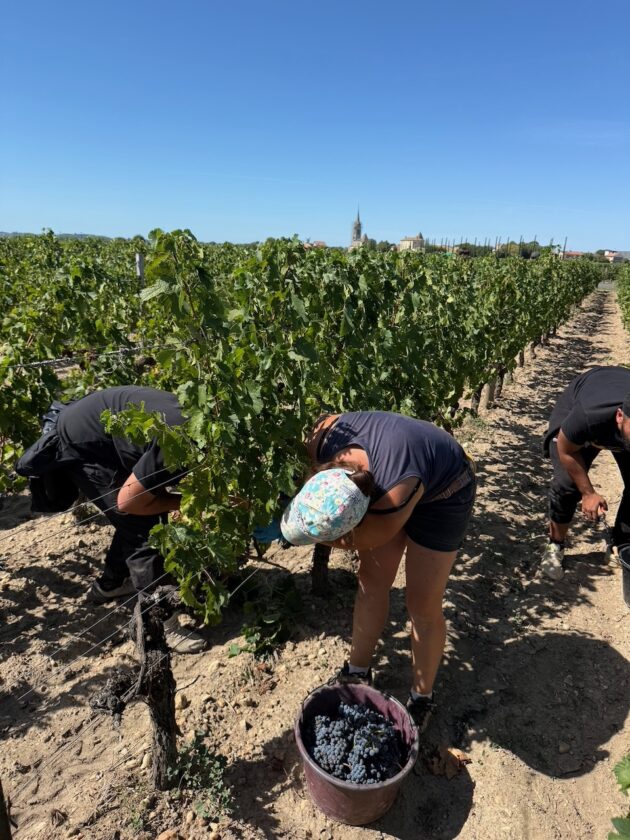
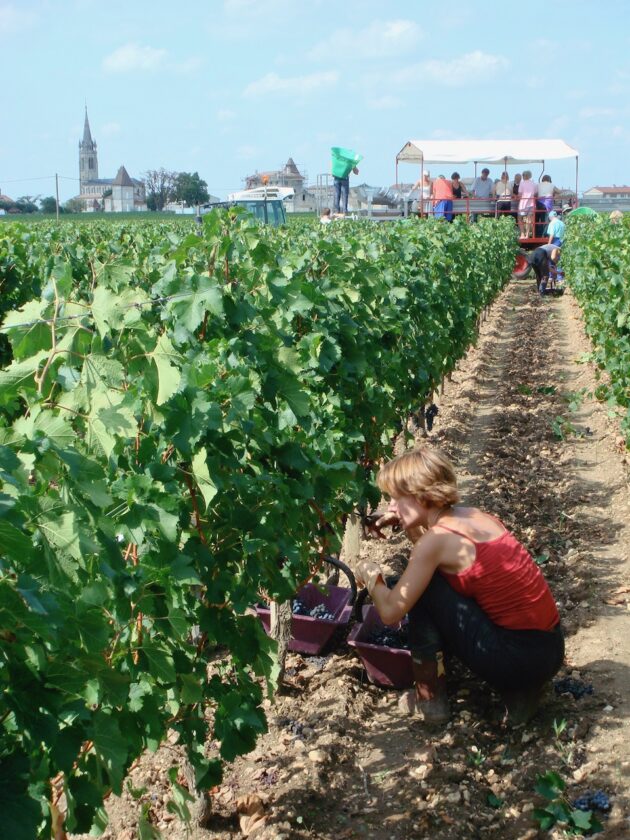
I remembered that I’d taken photos in or near this plot some time before. Turns out it was 20 years ago, in 2006.
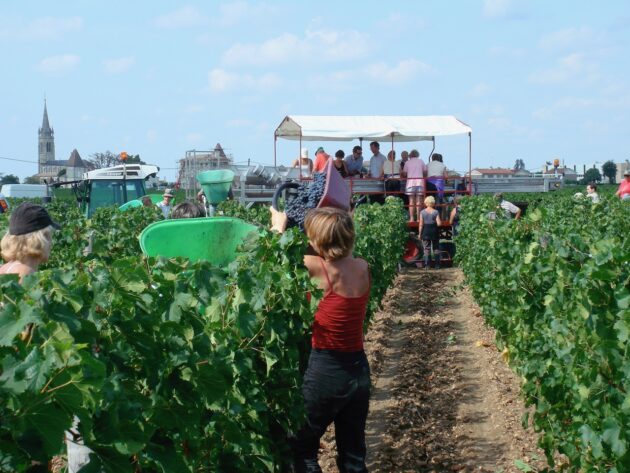
Back in early October 2006, Alexandre was there on the sorting table, and Christian Moueix had popped over from Petrus, which he was running at the time.
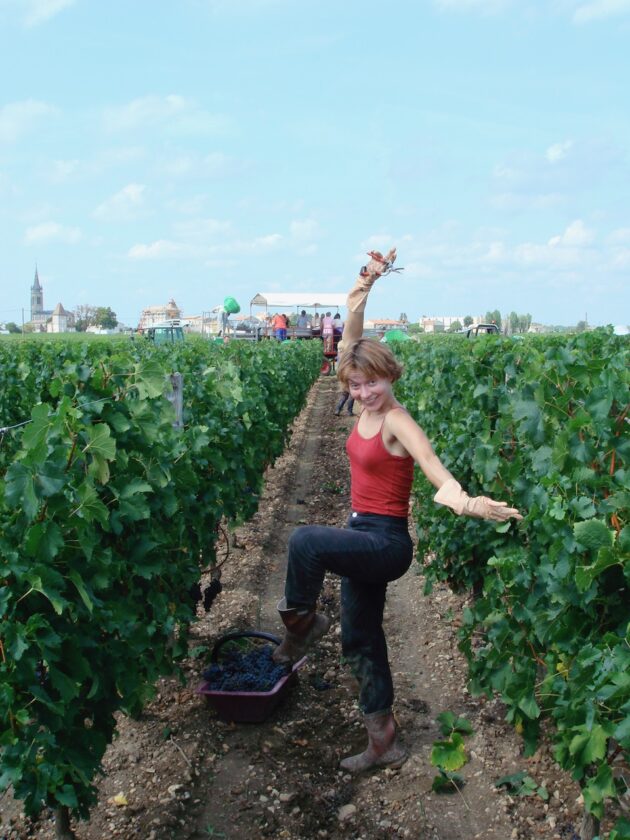
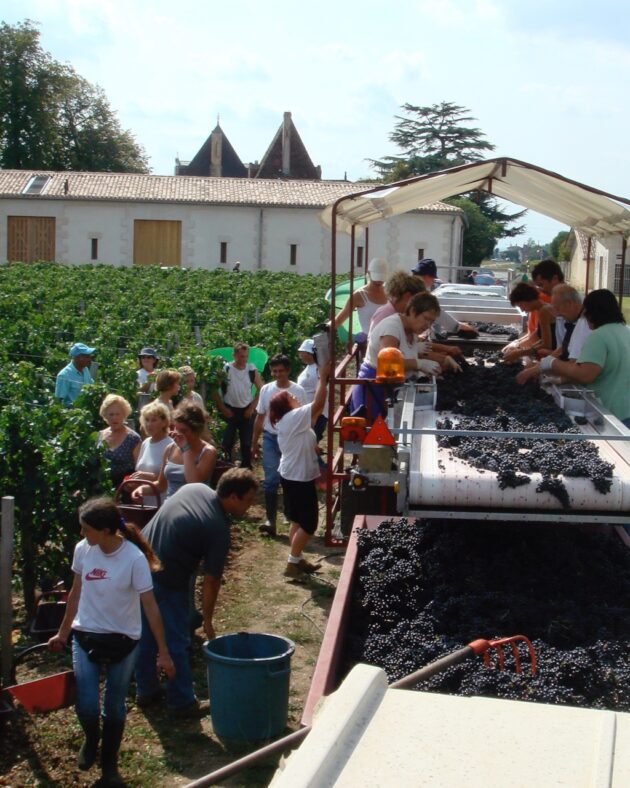
Funnily enough, Vieux Château Certan 2006 turned out to be ‘one of the wines of the vintage’ according to uber-critic Robert Parker. (He’s not wrong.)
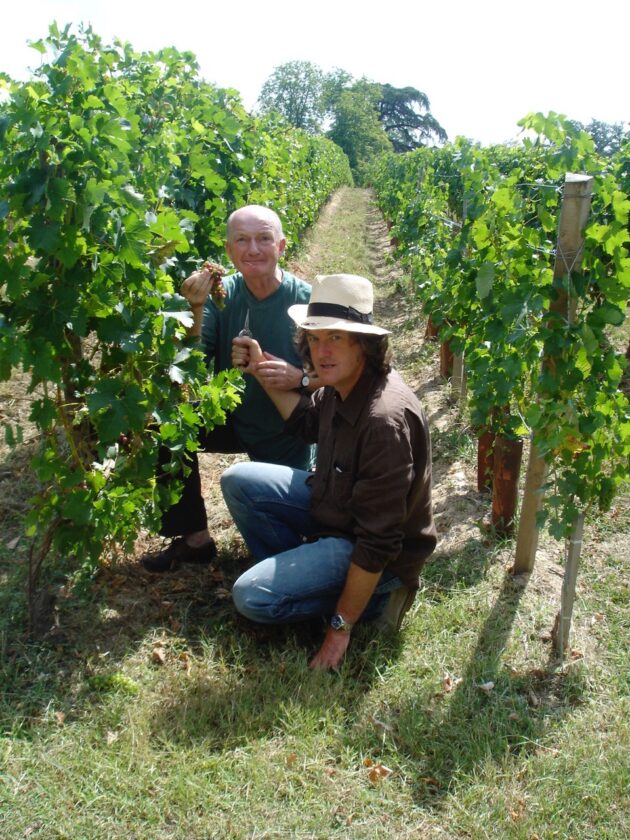
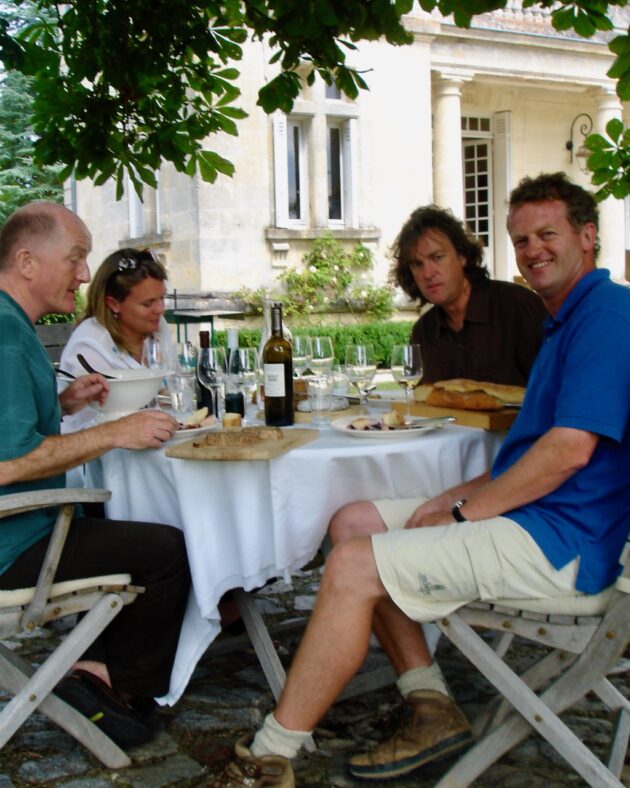
And while looking through the photos of that vintage 20 years ago, I came across the day when Oz Clarke and James May came to visit us. (Oz asked James how he would describe our sauvignon blanc – “perhaps green apples, herbaceous, nettley…?” asked Oz. James replied “to me it tastes, well… winey.”)
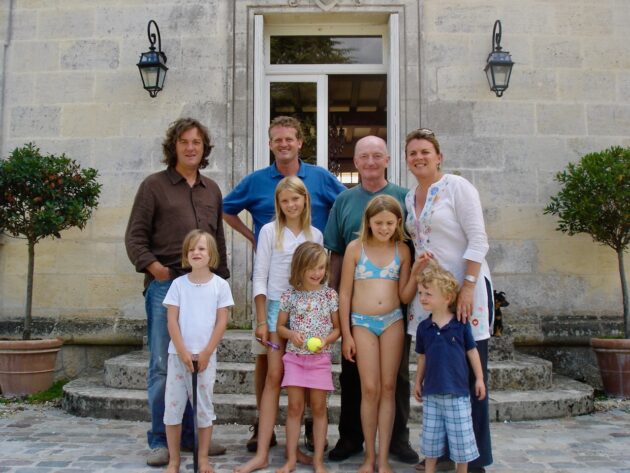
Obviously we had a family photo taken in front of the château, including our niece Bella in the pink skirt.
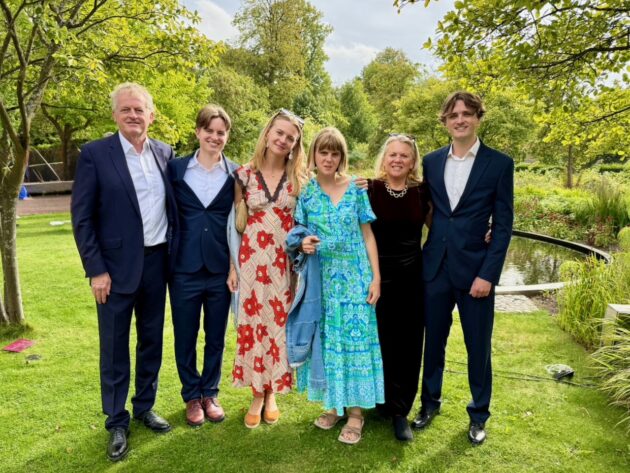
And here we all are 20 years later, at a family wedding in Gothenburg in Sweden this month.
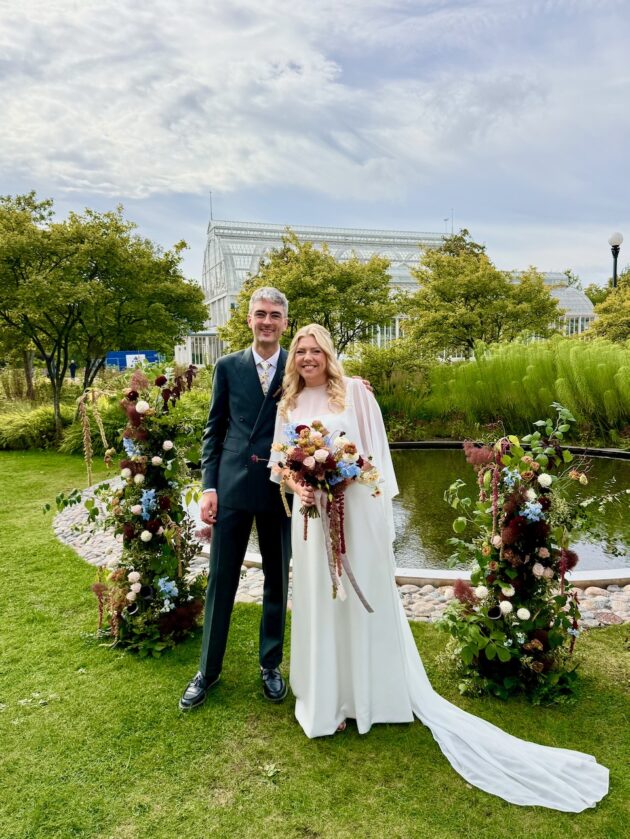
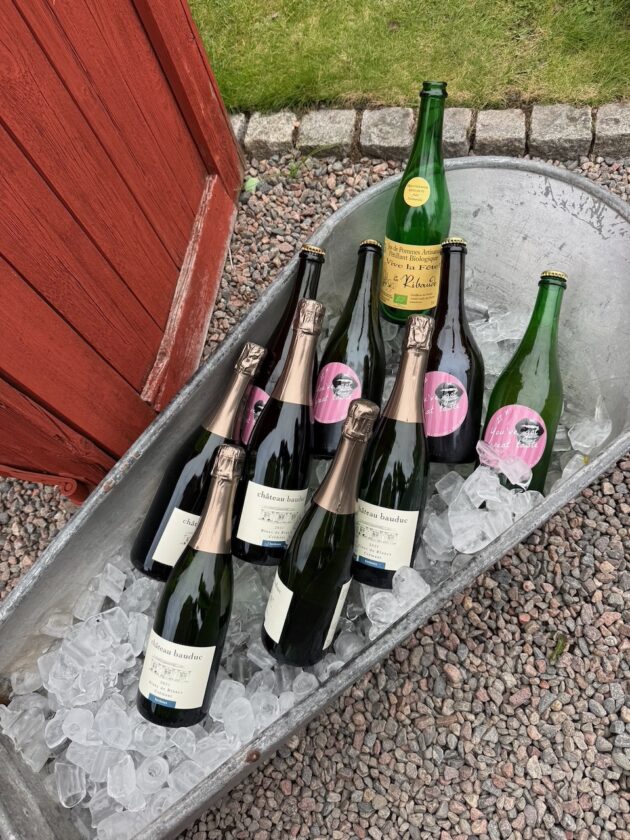
Many congratulations to nephew Edward and Amanda, and huge thanks for buying our Crémant 2021, Sauvignon Blanc 2025 and Celebration Cuvée 2020 red in magnum – and having it all shipped in for the outstanding reception and dinner.
Onwards and upwards.